


Understanding the worst startup failure reasons requires looking past market conditions and conducting a deep causal analysis of human capital decay and founder decision-making.
Worst Startup Failure Reasons: A Causal Analysis of Human Capital Decay
However, behind each success story there lies a cemetery of businesses that failed. The reasons for the failures are usually easy to identify – a nonexistent market, a better competitor, or poor pricing strategy. While such causes are obviously important, they are mostly consequences of something much deeper and far more basic. Analysis shows – the amount of wasted money in venture investments from 2019 to 2024 is estimated at more than $1.2 trillion – a disturbing regularity: up to 60-70% of startup failures occur due to human-based causes rather than anything that happens outside the business itself. What the Worst Startup Failure Reasons come down to? In virtually all cases – problems inside the business leadership team.
This reality presents a profound paradox. In an era defined by data-driven decision-making, the single most critical variable in any venture—the founder’s “soft power,” encompassing their cognitive readiness, behavioral judgment, and ecosystem awareness—remains the most subjectively assessed. This article delves into the causal chain of leadership failure, moving from the general principles of management to the hyper-specific context of high-growth startups, ultimately arguing that these catastrophic failures are not random acts of fate, but predictable, and therefore measurable, patterns of human behavior.
What Causes Leadership Failure?
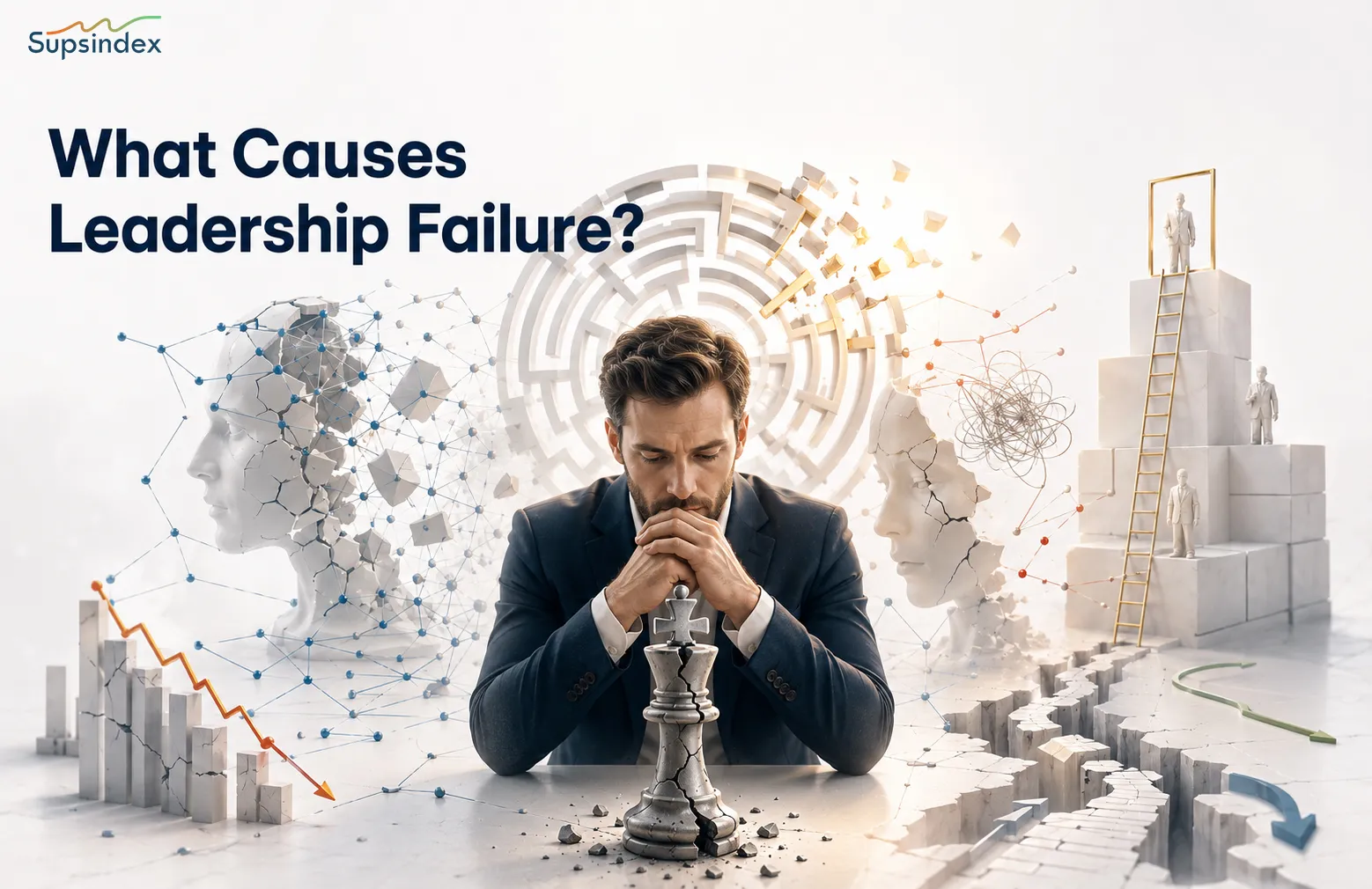
However, before analyzing the topic at hand, it is essential to understand the foundational mechanics of leadership breakdown. Leadership failure rarely happens overnight; it is a gradual erosion of judgment, psychological safety, and adaptability. When founders operate in high-stress, ambiguous environments, their underlying cognitive biases—such as the sunk-cost fallacy, extreme optimism bias, or confirmation bias—become magnified. Without a data-driven mirror to reflect these blind spots, leaders double down on flawed strategies, alienate their core teams, and ultimately drain their capital runways.
10 Major Causes of Failure in Leadership
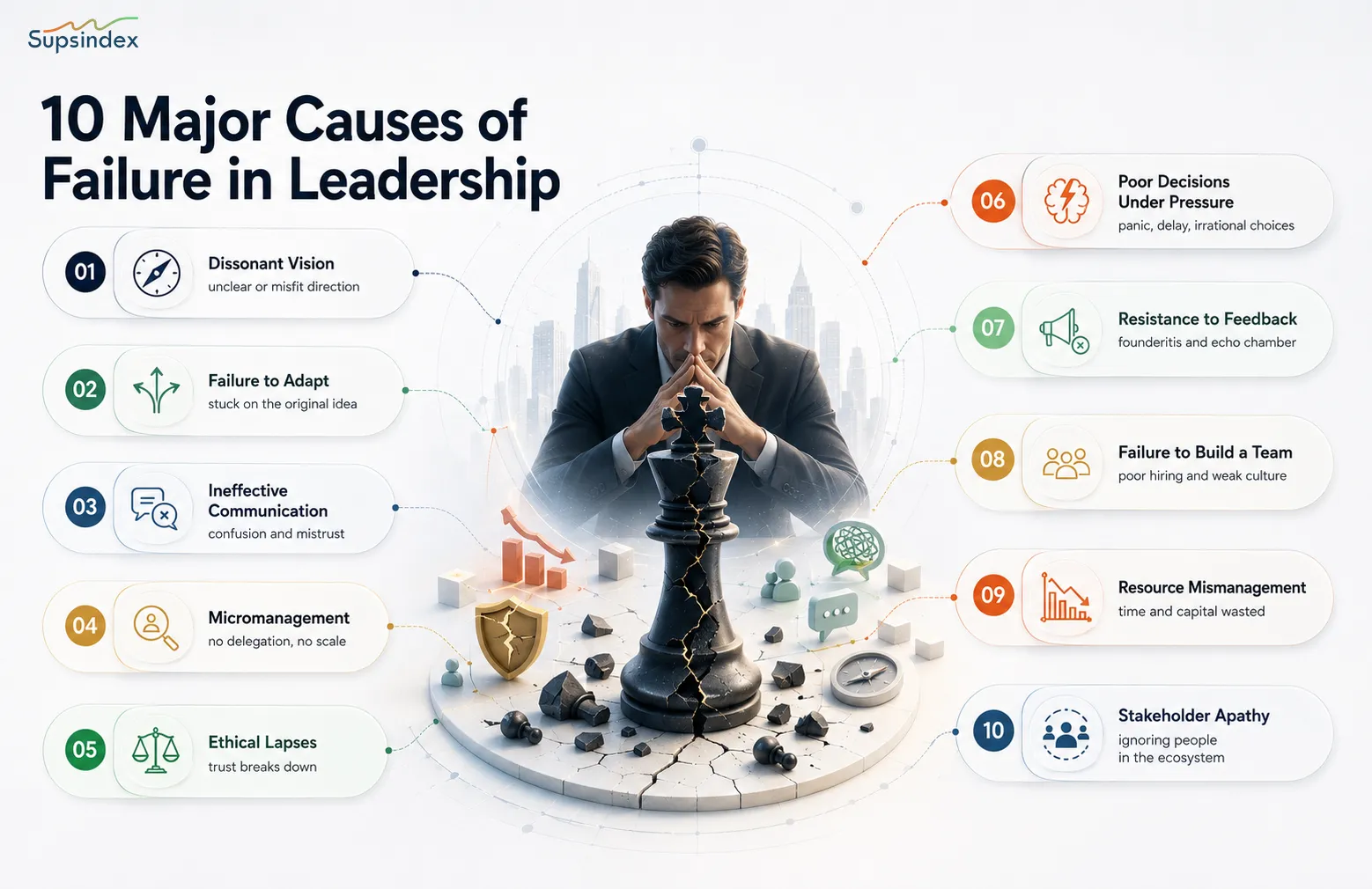
To systematically unpack human capital decay, we can categorize the operational and psychological pitfalls into the 10 major causes of failure in leadership. These include:
- Inability to Pivot: An emotional attachment to the original product despite clear market rejection.
- Founder Conflict: Unresolved ego clashes and misaligned equity or operational expectations among the founding team.
- Lack of Epistemic Humility: The refusal to listen to customer feedback or accept empirical data that contradicts the founder’s vision.
- Micromanagement: Failing to delegate as the company scales, creating devastating operational bottlenecks.
- Financial Illiteracy: Misunderstanding unit economics, leading to reckless burn rates and premature scaling.
- Hiring for Culture Fit over Capability: Building an echo chamber rather than a diverse, highly capable executive team.
- Loss of Focus (Shiny Object Syndrome): Constantly shifting engineering and marketing resources to chase new trends rather than dominating a niche.
- Poor Crisis Communication: Inducing panic or losing trust by hiding runway realities from the team and investors.
- Burnout and Decision Fatigue: Chronic stress eroding the executive function required for high-stakes strategic planning.
- Ecosystem Ignorance: Failing to understand the specific regulatory or capital environments of the market they are operating within.
Worst Startup Failures Caused by Founder
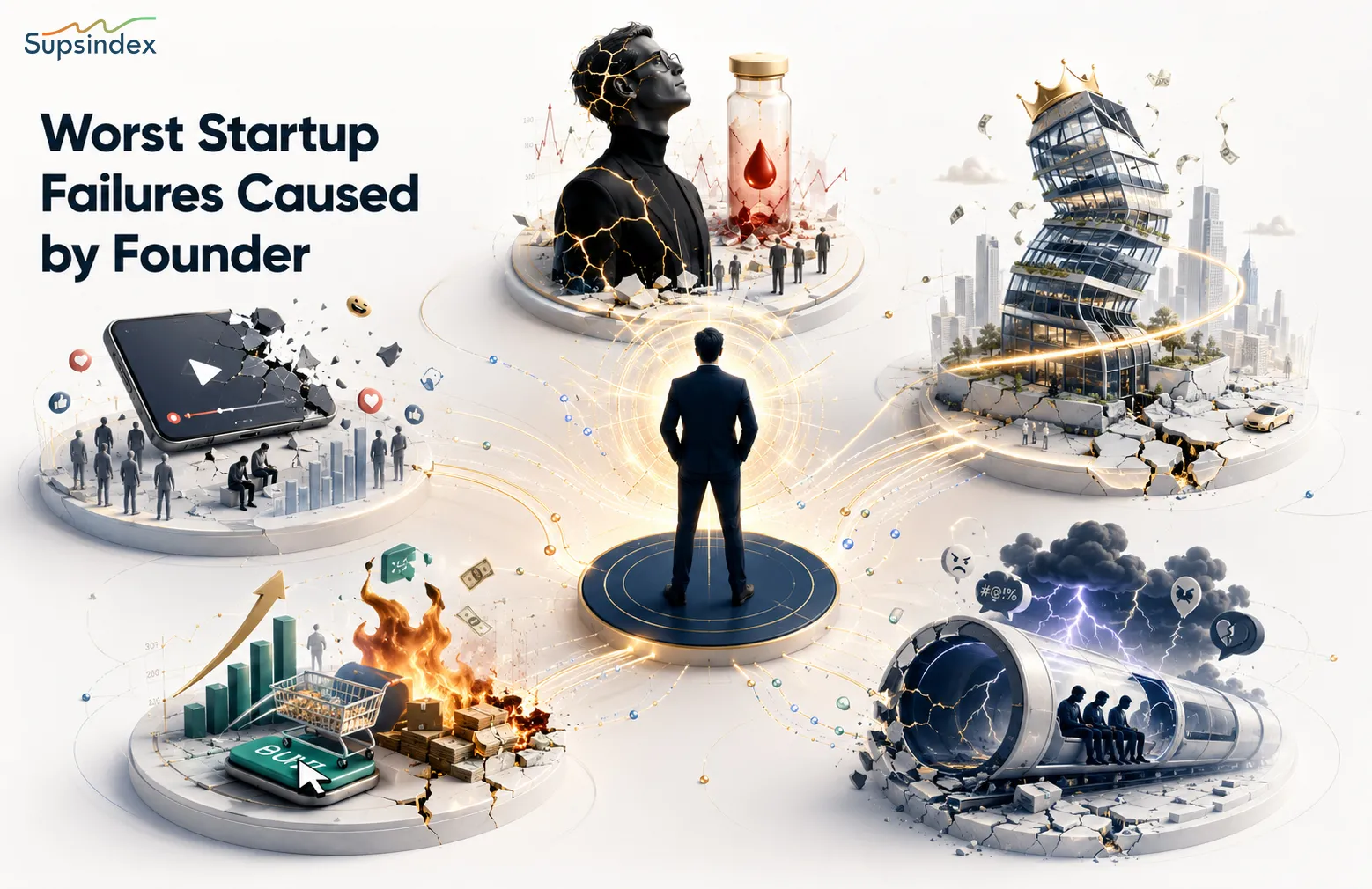
The narrative of entrepreneurship is littered with the wreckage of brilliant ideas helmed by flawed leaders. For too long, the ecosystem has accepted this as an unavoidable cost of innovation, relying on intuition, reputation, and charisma to select founders. This approach has proven to be spectacularly inefficient and breathtakingly expensive.
The failures of Theranos, WeWork, Quibi, and countless others were not unforeseeable. They were preceded by clear behavioral red flags: a resistance to feedback, a disconnect from reality, a lack of financial discipline, and an inability to build a healthy culture. These are not mysterious qualities; they are measurable dimensions of human capability.
Solving the Worst Startup Failure Reasons Through Measurement
If the innovation economy is to move beyond this cycle of preventable waste, it must embrace a more scientific approach to human capital. The critical first step is moving from intuition to objective measurement. By quantifying the very “soft skills” that determine outcomes, founders and the ecosystems that support them can begin to de-risk the human element of venture building, turning a history of preventable failure into a future of data-informed success. It is only by accurately measuring these foundational capabilities that we can hope to truly understand, and ultimately solve, the Worst Startup Failure Reasons.
To explore the scientific frameworks designed to measure and develop founder capabilities, you may find the methodologies and indices being developed at Supsindex to be of interest.
