
What Is a Situational Judgment Test? A Founder Decision Example

What is a Situational Judgment Test (SJT), and how can it help founders evaluate difficult decisions? This guide starts with an illustrative B2B SaaS crisis: a competitor cuts prices by 40%, two enterprise prospects pause negotiations, and the startup has just seven months of runway. Four possible responses reveal the trade-offs between speed, customer evidence, financial risk, and strategic inaction. The scenario is educational—not a live or psychometrically calibrated Supsindex test item.
The article explains why investigating customer concerns and testing a targeted response is the strongest option under the stated conditions, while avoiding investigation is the weakest. It introduces Situational Judgment Tests as low-fidelity simulations, distinguishes judgments about what someone should do from predictions of real-world behavior, and describes Supsindex’s 75-scenario General Entrepreneurial Behavior (GEB) assessment. A four-question strategic audit, a concise terminology glossary, and detailed FAQs provide practical ways to reflect on decision-making. Scientific research and Supsindex’s preliminary partner evaluation are discussed separately, with clear limits on what current evidence can establish about founder performance.
Founder Community Reimagined: How SupsHub Filters Signal From Noise

SupsHub is a founder community built around a simple problem: founders already have access to enormous amounts of advice, but determining which information deserves attention is much harder. The platform is designed to connect founder assessment with practical peer learning, structured discussions, visible qualifications, and capability-based participation.
Public SupsHub discussions are intended to remain open for everyone to view. Active founder participation, however, requires completion of at least one qualifying Supsindex assessment. Community Members can ask questions and interact through voting, while qualifying Q1 Starred Members, approved Faculty Members, and authorized Ecosystem Ambassadors can receive Reply Capability.
The article explains the full SupsHub model, including Conversation Hashtags, Helpfulness Rate, assessment-based recognition, selected and anonymized report sharing, moderation, Faculty and Ambassador participation, continuous founder development, planned Supex integration, future ecosystem connections, and the access process through the Founder Dashboard. SupsHub is currently in its finalization stage and is expected to become available soon.
Solo Founder Risk: The Essential Guide to Venture-Scale Startups

Solo founding is becoming more common as software infrastructure, cloud services, automation, generative AI, and increasingly capable AI agents allow one person to perform work that once required larger teams. But the central question is not whether one person can start a company. It is whether a solo founder can construct enough cognitive, behavioral, operational, and relational leverage to prevent individual blind spots from becoming limitations of the entire venture. The article notes that solo-founded companies are increasingly common while still receiving a disproportionately smaller share of venture funding.
The evidence is more nuanced than the usual claim that teams always outperform solo founders. Research discussed in the article identifies a solo founder disadvantage in some settings, while also showing that broad and deep experience can materially reduce that disadvantage. Founding teams bring additional human capital and internal challenge, but they can also introduce coordination costs, disagreement, and interpersonal conflict.
The article examines solo founder risk through the Supsindex lens, including FEE, Penalty for Bottleneck, delegation, financial literacy, cognitive overload, intellectual humility, ecosystem awareness, and AI. Its core argument is that strong solo founders are rarely operationally alone; they deliberately build systems of senior talent, advisors, governance, measurement, and external challenge around themselves.
Dedicated Index: 5 Proven Steps to Best Startup Solutions
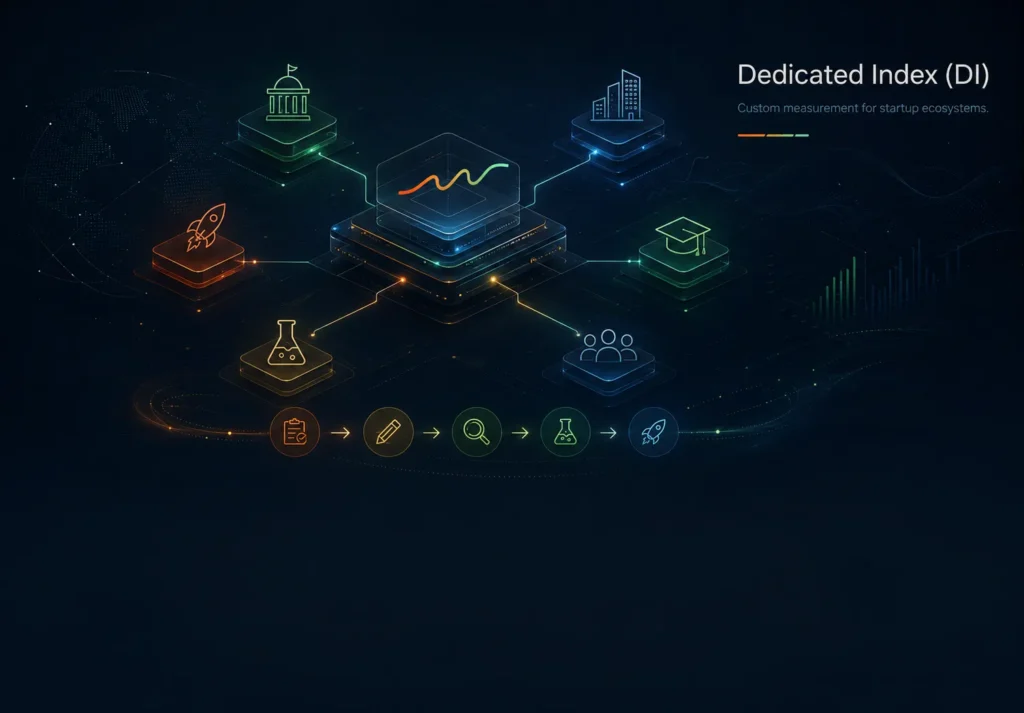
The financial world relies on indexes to make high-stakes decisions, so why does the startup ecosystem still rely on gut feelings to evaluate human capital? Discover how a Dedicated Index can provide your accelerator, VC firm, or government agency with custom measurement tools tailored to your unique success metrics.
Ultimate 75-Question General Entrepreneurial Behavior Test
Supsindex behavioral assessment engine You’ve probably heard the stat before: 60–70% of startup outcomes are decided not by the product, the market, or the funding, but by the soft power inside the founding team. That’s exactly what the General Entrepreneurial Behavior test (GEB) was built to decode. While our FPA test maps what you know, […]
Founder’s Guide: Ecosystem Environmental Awareness Test
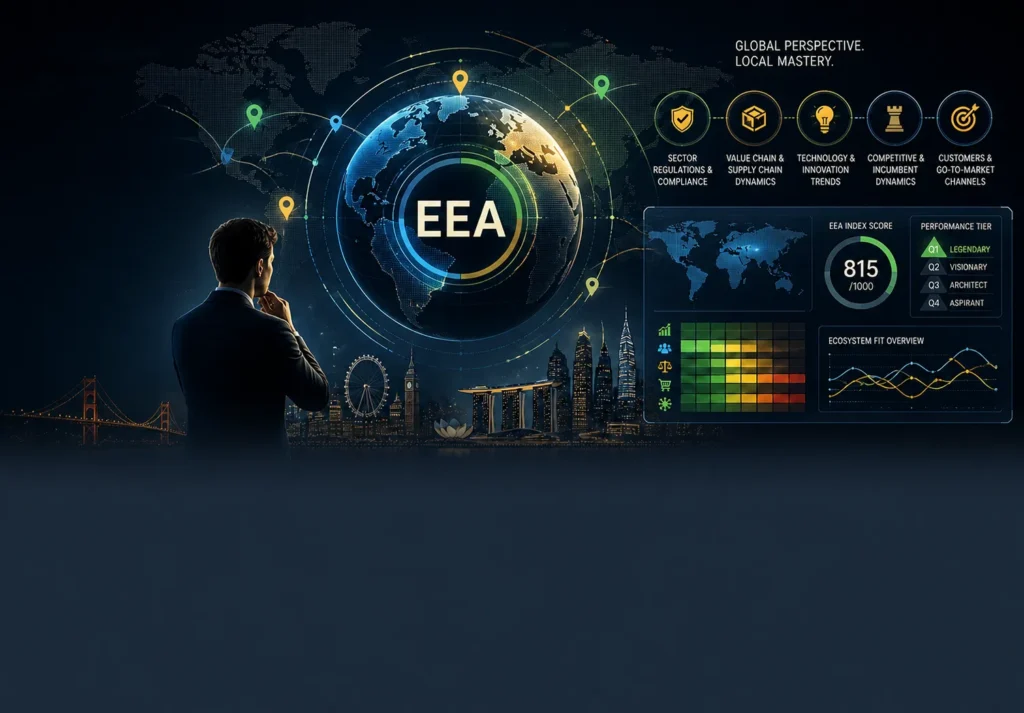
Supsindex ecosystem assessment engine You can have the sharpest business model and the most resilient mindset, but if you don’t understand the ecosystem you’re stepping into, the odds turn against you. That’s where the Ecosystem Environmental Awareness test (EEA) comes in. It doesn’t measure general startup knowledge or your psychological wiring – it measures your […]
A Founder’s Guide to the Founder Public Awareness Test

Supsindex cognitive assessment engine The Founder Public Awareness test (FPA) was designed to close a critical gap: startups rarely fail because the idea was bad, they fail because the founder didn’t know what they didn’t know. It’s not a trivia quiz. It’s a stage-aware, scientifically structured mirror that measures your entrepreneurial literacy, your ability to […]