

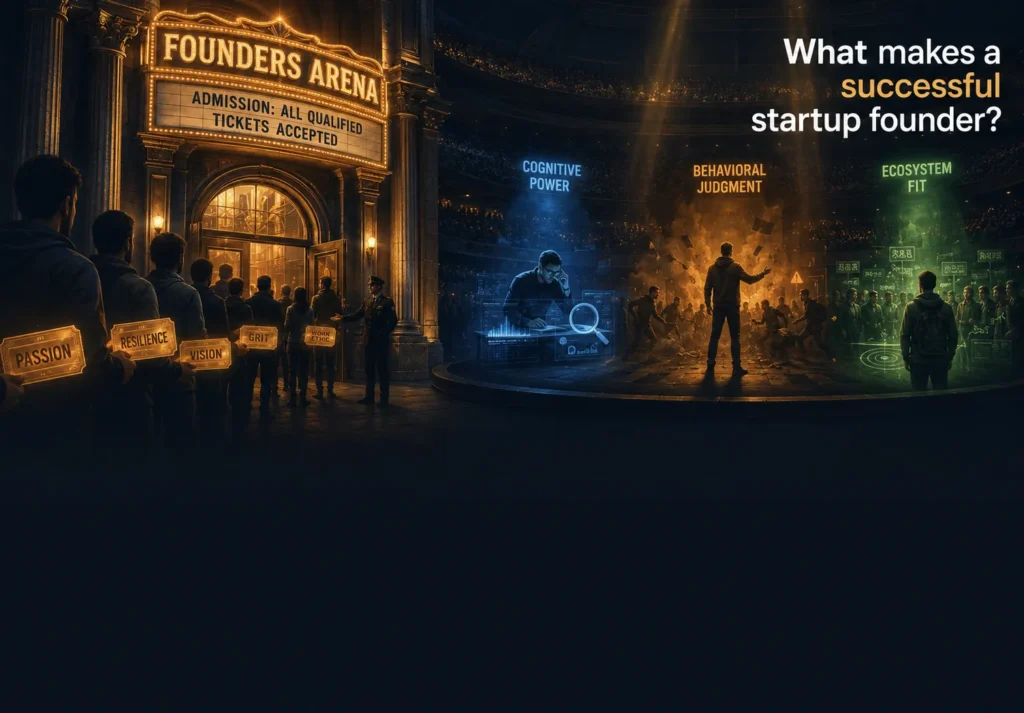
To eliminate capital waste and build resilient ventures, we must move past romanticized myths and objectively measure exactly what makes a successful startup founder.
What makes a successful startup founder?
In the modern economic lexicon, the “startup founder” has been elevated to a near-mythical status. They are portrayed as solitary visionaries, iconoclasts who bend reality to their will through a sheer force of passion, grit, and an almost supernatural foresight. This narrative, while compelling, is a dangerously incomplete and romanticized caricature. A rigorous, evidence-based examination of the entrepreneurial landscape reveals a far more complex and sobering truth. For every celebrated success, there is a vast and costly graveyard of failed ventures. Analysis of the venture capital market between 2019 and 2024 indicates that of the approximately $1.7 trillion deployed, a staggering $1.2 trillion was effectively incinerated in ventures that failed to return capital. The most critical finding from post-mortems of these failures is that 60-70% of them are not attributable to market dynamics, technological deficits, or competitive pressure, but to preventable human-centric factors rooted in the founding team.
The gap between myth and reality raises the core issue: What constitutes a successful startup entrepreneur? Success cannot be measured in mere personality attributes or through an illustrious academic pedigree. It is the end result of an integrated array of complex characteristics that are cognitively, behaviorally, and situationally measurable. In order to fully comprehend the difference between those who are capable of creating something lasting and those who will fail due to their dreams, we need to go beyond the art of story-telling and into the realm of assessing human capital.
Successful traits of startup entrepreneurs
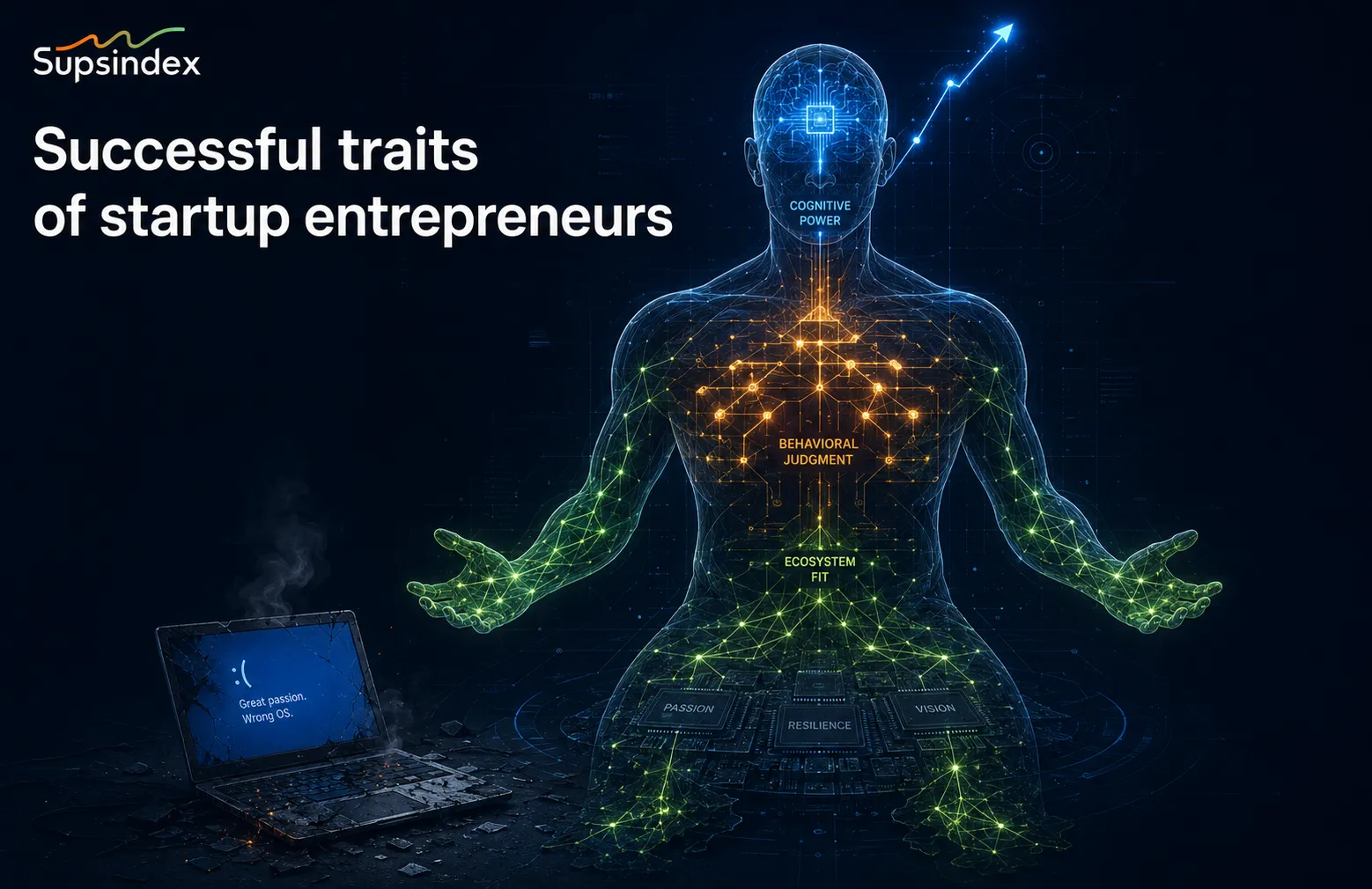
For decades, business literature and popular culture have attempted to codify the successful traits in startup founders. The usual suspects are always trotted out: passion, resilience, vision, risk tolerance, and an unwavering work ethic. While undeniably necessary, these traits are merely the table stakes—the price of admission to the entrepreneurial arena. They are insufficient as predictors of success because they lack context and are notoriously difficult to measure objectively. Passion without a viable business model is merely a hobby. Resilience in the face of overwhelming negative market data is not grit; it is delusion.
A more scientifically robust framework requires dissecting founder capabilities into distinct, measurable domains. Based on a synthesis of organizational psychology, behavioral economics, and extensive empirical data from the startup ecosystem, we can identify three core pillars of founder “soft power”:
- Cognitive Power (Entrepreneurial Literacy and Signal Detection): This isn’t a measure of IQ, but of knowledge usage. This is a founder’s skill in comprehending how business really works, down to its mechanics, laws, and economics, and even more importantly, how to recognize what is actually important in all the chaos—what is signal and what is noise. In today’s age of information, where there is so much data out there, a founder with the ability to recognize the one crucial metric (user retention, for example) against a dozen vanity metrics (press attention, for instance) wins out.
- Behavioral Judgment (Decision-Making Under Pressure): This pillar moves from what a founder knows to how they decide. It encompasses their ethical framework, their susceptibility to cognitive biases (like overconfidence or sunk-cost fallacy), their emotional regulation in a crisis, and their core mindset. A founder with a “growth mindset,” as defined by psychologist Carol Dweck, views failure as a data point for learning, whereas a founder with a “fixed mindset” views it as a personal indictment, leading to brittleness and an inability to pivot. These behavioral patterns are the operating system that runs on the hardware of their cognitive abilities.
- Ecosystem Fit (Contextual Intelligence): The business venture is not a lone wolf. It is a biological entity trying to survive within its immediate ecosystem. This metric gauges how much a person understands about his chosen ecosystem and the unique rules, norms, and pressures that come with it. This means understanding the investment climate of that place, what the talent pool expects from you, regulatory obstacles, and the unspoken laws of business there.
The truly successful traits in startup founders are not isolated attributes but the integrated expression of these three pillars. A founder can have immense cognitive power but fail due to poor behavioral judgment, or possess both but fail because they misread the ecosystem.
Personality traits of startup founders
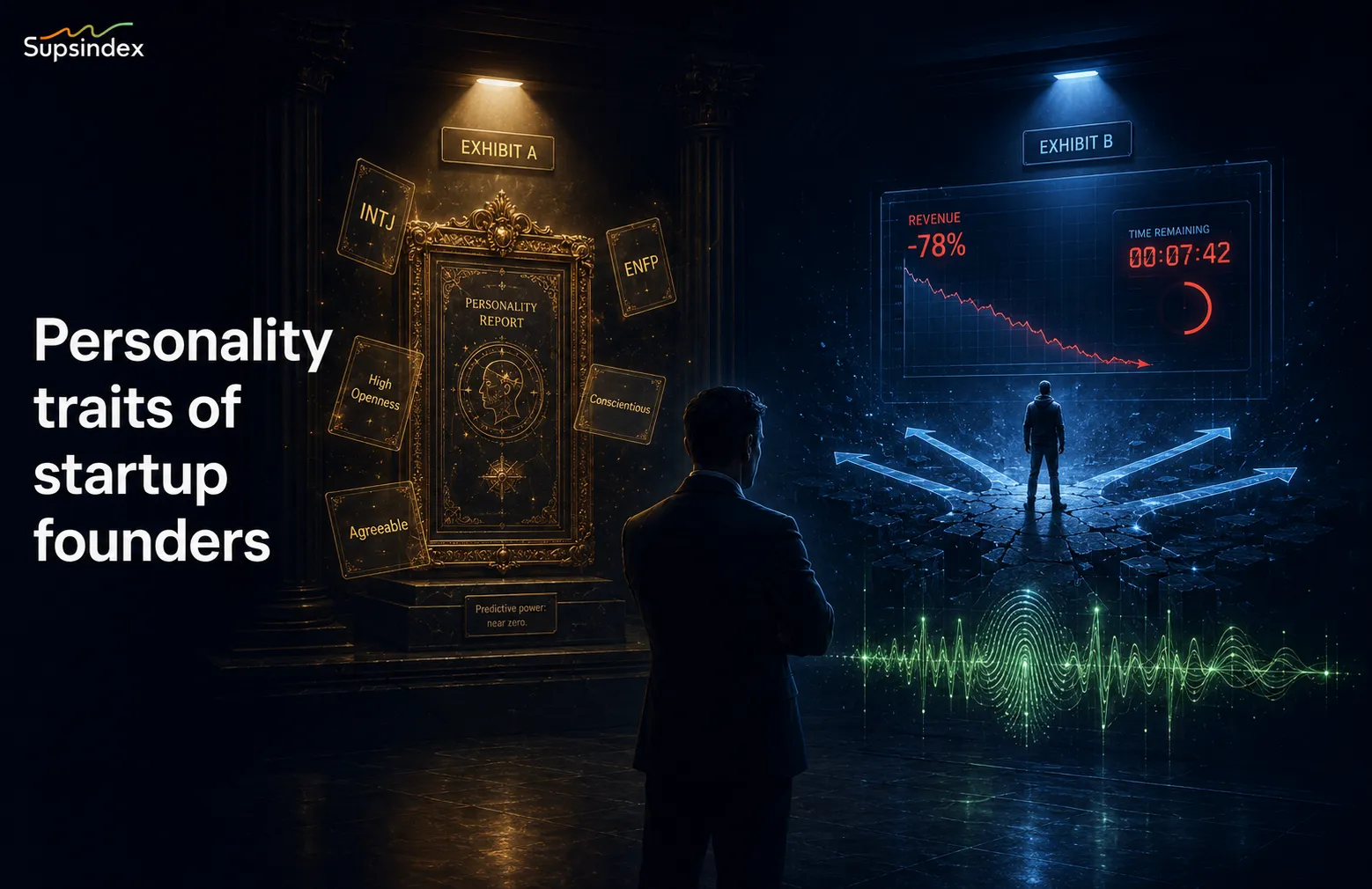
The search for the ultimate definition of the entrepreneurial personality resulted in many attempts at providing definitions. Nevertheless, there is a basic flaw in the majority of tests that are designed to define the entrepreneurial personality from the perspective of their scientific validity. The Myers-Briggs Type Indicator (MBTI), for instance, remains popular in corporate settings but is viewed by the academic psychology community as little more than a sophisticated horoscope. Its reliance on rigid, binary categories (e.g., Thinking vs. Feeling) fails to capture the spectrum of human personality, and its low test-retest reliability means an individual’s “type” can change from one month to the next. While it can provide a simple language for team-building exercises, it has almost no predictive power for job performance, let alone the extreme demands of entrepreneurship.
The Big Five model (Openness, Conscientiousness, Extraversion, Agreeableness, Neuroticism) is far more scientifically valid and empirically grounded. Research has shown, for example, that high conscientiousness correlates with better job performance across many fields. However, its utility for founder assessment is limited by two critical flaws. First, it relies on self-reporting, which is notoriously susceptible to social desirability bias; founders are incentivized to present themselves as more conscientious or less neurotic than they truly are. Second, it is descriptive, not predictive of behavior in specific contexts. Knowing a founder is “high in Openness” tells you nothing about how they will behave when faced with a sudden 80% drop in revenue.
A more advanced approach to assessing the personality traits of startup founders must move beyond self-reported adjectives to measuring demonstrated behaviors. This requires methodologies like Thurstonian Item Response Theory, which uses forced-choice scenarios (e.g., “In this crisis, which of these four actions is most effective and which is least effective?”). This format forces trade-offs, mirroring real-world decision-making and allowing for the mathematical recovery of a founder’s latent priorities and behavioral tendencies, even if they are trying to present an idealized version of themselves. This reveals not just what they say they value, but what they actually prioritize under pressure. The crucial distinction is between assessing personality as a static label and measuring behavioral judgment as a dynamic capability.
Founder effect issues
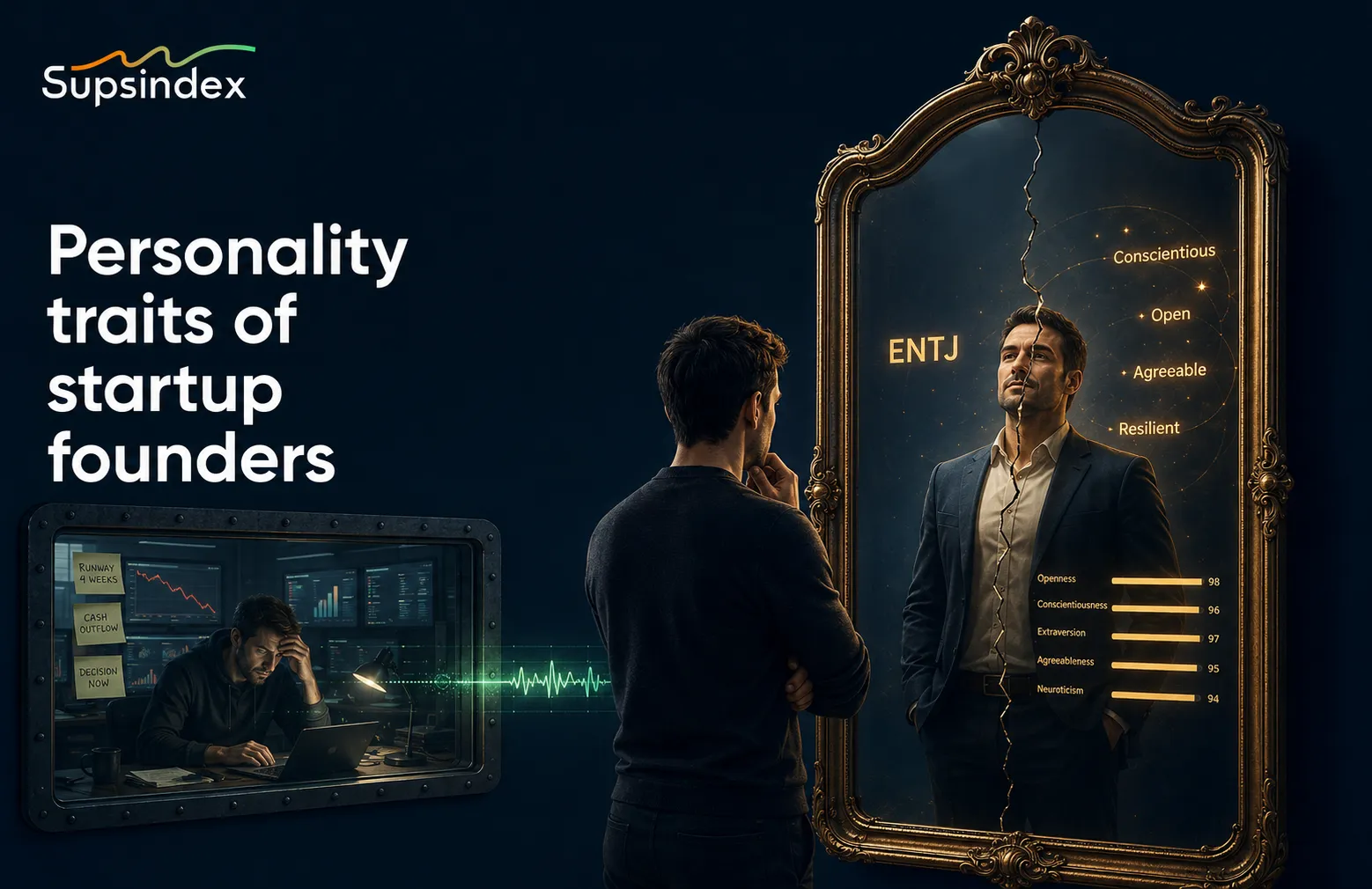
This is because the reason that makes the startup so strong from the beginning, the founder, becomes responsible for its downfall in the end. The phenomenon is called the “Founder Effect,” as it refers to how much weight the values, actions, and even biases of the founder have on the development of the corporate culture. Although it might work great at first, this effect often causes serious founder effect problems in the long run.
However, those very traits which help the entrepreneur thrive during the 0-to-1 stage of a business’s development – namely, absolute belief, hands-on involvement, and laser-like focus – can actually be detrimental for the next stage of growth – the 1-to-100 stage.
- From Belief to Arrogance: It was the belief that allowed the start-up of the business that later turns into arrogance. The entrepreneur does not show sensitivity to criticisms coming from outside, disregarding all the advice from the board of directors, workers, and even from the clients. The individual falls victim to the condition known as “visionary blindness” which makes the original vision into an ideology preventing him/her from seeing what happens on the market.
- From Hands-On to Micromanagement: The founder who once wrote the code, took the sales calls, and packed the boxes struggles to delegate. As the team grows, this inability to trust others erodes autonomy, demotivates high-performers, and creates a bottleneck where every decision must pass through the founder. This is a classic failure to transition from a “doer” to a “leader of doers.”
- From Risk-Taking to Recklessness: The calculated risks that were essential for early breakthroughs can morph into sub-optimal, “bet-the-house” gambles. Fueled by overconfidence and often amplified by large infusions of venture capital, the founder may pursue unsustainable growth, neglect unit economics, or make rash strategic decisions without proper diligence.
These problems related to the Founder Effect are not personal problems but rather behaviors that result from the founder’s way of doing things not evolving enough with the level of complexity found in his or her organization. When self-management, self-assessment, and feedback are missing, the founder himself becomes the main obstacle to the development of his or her company.
Characteristics of top founders
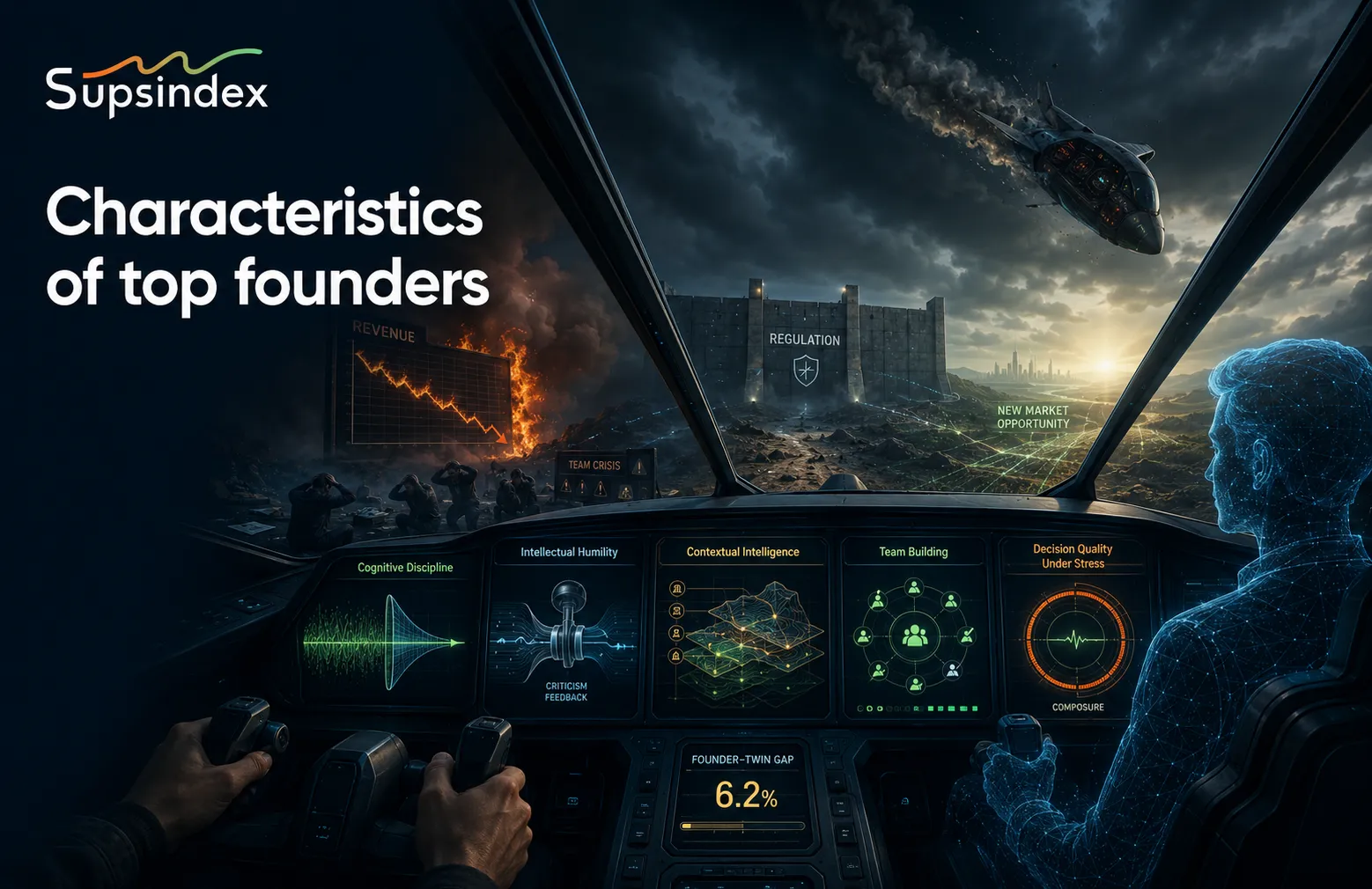
But then, what are the real characteristics of the best founders, given that all these narratives about them do not paint an adequate picture and that the Founder Effect is so perilous? These are not just qualities but rather more of capabilities and especially meta-capabilities that help them cope with complexity.
- High Signal-to-Noise Ratio (Cognitive Discipline): The ideal founders have elite information filtering skills. Living in an age of abundant information, they have the mental fortitude required to pick out the very few key metrics that actually count to the survival of their business at that particular stage. They do not get misled by vanity metrics or the noise in the environment. This quality forms the cornerstone of what the FPA (Founder Public Awareness) index, created by Supsindex, looks for.
- Intellectual Humility and Growth Mindset (Behavioral Adaptability): Among the characteristics of successful entrepreneurs, a profound awareness of the possibility of being wrong features prominently. These individuals purposely expose themselves to different opinions and welcome constructive criticism because such criticism is seen by them as an opportunity. All of the above are characteristic of a growth mindset, or the awareness that their skills are not set in stone. Upon discovering their weaknesses by using tests such as the General Entrepreneurial Behavior (GEB) test, they are curious rather than defensive.
- Ecosystem Mastery (Contextual Intelligence): Founders who make the best entrepreneurs have high levels of contextual intelligence. They know how the game operates according to the environment they are operating within. In other words, they do extensive research on the specific laws, funding mechanisms, and culture within an ecosystem before venturing into any new markets. For example, the founder knows that the market approach required for taking a Software-as-a-Service (SaaS) technology into America would not be effective for the same health technology product in Germany.
- The Dynamics of Outstanding Team Building: Outstanding founders are aware of the fact that their first and foremost product is the team. It is not a matter of recruiting co-founders out of camaraderie but out of matching behavioral traits. They are aware of the necessity of balancing visionary personalities with those of operators and risk takers with stabilizers. They have a tendency to get obsessed about creating psychological safety because they know very well that a team of people who are scared to express themselves cannot possibly innovate.
- Composure and Quality of Decision-Making During Stressful Situations: The ability of great founders to keep strategic focus during stressful situations is among the most notable qualities of great founders. While other people panic, they grow even more focused. Such a quality cannot be determined through surveys. It has to be seen. This is what makes simulation exercises, such as the Founder Decision Excellence (FDE) “Leadership Flight Simulator” tool, possible. Through this simulation, a founder is thrown into a crisis scenario and assessed based on his/her decisions compared to those of his/her digital twin. It measures the gap between their stressed human reaction and a purely rational response.
Ultimately, the most crucial quality is that of constant improvement. Great entrepreneurs are not the ones with the answers but the ones who learn and grow faster than others. They are fanatics when it comes to measuring themselves, but not because they care about scores, but because they strive to narrow the distance between themselves and what their firm requires of them.
Conclusion: Measurable Future of Founders’ Success
The venture will always be characterized by risk and unpredictability. But what the evidence shows is that most startups that fail do so not because of any changes in the business landscape, but due to human error which was entirely predictable and could have been prevented. The current system, where intuition, charm, and pedigree play a critical role in judging the caliber of entrepreneurs is outdated and highly inefficient. This was at a time we did not have ways of peeking into the “black box” of the entrepreneur.
What defines a successful entrepreneur? It is cognitive, behavioral, and situational literacy; the ability to adapt, the humility to learn, and good judgment even when the situation calls for it.
The future of venture capital and entrepreneurship is going to be in the hands of people who adopt this new model of science-based approaches. By shifting from guesswork based on subjective judgment to reliance on scientific data, it is possible to start decreasing the huge wastage that prevails in the industry while using funds in the right direction and helping entrepreneurs launch successful businesses. The tools to measure the architecture of potential now exist. The critical question is whether the ecosystem has the courage to use them.
To explore the scientific frameworks and validated indices designed to measure and develop these foundational founder capabilities, you may find the methodologies pioneered by Supsindex to be of interest.
