


The Founders’ Discovery Project turns founder readiness into measurable evidence through structured assessment, academic collaboration, and real-world observation.
Founders’ Discovery Project: Turning Founder Readiness into Measurable Evidence
The startup ecosystem has developed increasingly sophisticated ways to evaluate markets, business models, products, financial projections, and investment opportunities. Yet one of the most influential variables in any venture remains difficult to measure: the founder.
Investors, accelerators, incubators, and other decision-makers frequently assess founders through interviews, pitch presentations, references, prior experience, and personal judgment. These methods can reveal valuable information, but they can also be affected by incomplete data, cultural assumptions, cognitive bias, and the limited conditions of a formal selection process.
A founder may present confidently while lacking essential ecosystem knowledge. Another may possess strong technical or commercial knowledge but struggle to make effective decisions under pressure. A highly capable team may enter a market without fully understanding its regulatory environment, institutional structure, or local decision-making dynamics.
The challenge is therefore not simply to determine whether a founder appears promising. It is to understand whether the founder possesses the cognitive, behavioral, and contextual readiness required to operate effectively in the environment ahead.
The Founders’ Discovery Project, a Data Grant Pipeline Initiative by Supsindex, has been created to investigate this challenge through structured assessment, academic collaboration, and real-world observation.
The project brings together Supsindex’s scientific department, incubators and accelerators, universities, researchers, and participating startup teams. Its purpose is to test whether founder readiness can be measured objectively and whether those measurements meaningfully correlate with future decisions, execution quality, and venture outcomes.
Rather than assuming that assessment improves startup success, the Founders’ Discovery Project is designed to examine that claim scientifically.
Moving Founder Evaluation Beyond Intuition
Founder evaluation has traditionally depended heavily on subjective signals.
Decision-makers observe how founders communicate, respond to questions, describe their markets, explain their strategies, and interact with team members. From these observations, they form judgments about competence, adaptability, leadership, resilience, and investment readiness.
However, subjective evaluation presents several limitations.
Different evaluators may interpret the same behavior differently. Confidence may be mistaken for competence, while thoughtful hesitation may be interpreted as uncertainty. Familiar communication styles may receive more favorable evaluations than unfamiliar ones. A founder’s performance in a scheduled interview may also fail to reveal how that person behaves during a genuine operational crisis.
The Founders’ Discovery Project introduces a more structured approach.
Its objective is to transform previously difficult-to-measure founder characteristics into organized, comparable, and actionable data. This does not mean ignoring human judgment. Instead, it means giving decision-makers an additional layer of evidence that can support, challenge, or refine their initial impressions.
Supsindex describes this transition through two fundamental principles.
The first is data-driven alignment: replacing unstructured intuition with a verifiable assessment framework.
The second is objective transformation: converting subjective traits and signals into data that can inform practical decisions.
Together, these principles create the foundation for a different kind of founder validation—one that does not rely entirely on who gives the strongest pitch, makes the best first impression, or most closely resembles previously successful founders.
A Methodology for Founders at Every Stage
The Supsindex methodology is designed to evaluate founding teams across different stages of the startup lifecycle.
It is not limited to first-time entrepreneurs, early-stage startups, or founders who are still developing their initial ideas. More experienced founders and mature teams can also encounter cognitive blind spots, behavioral limitations, or ecosystem-related risks.
A founder may have successfully operated in one market but misunderstand the conditions of another. A team may perform well during normal growth but respond poorly to sudden resource constraints. A founder may possess significant industry knowledge while remaining vulnerable to particular decision-making biases.
For this reason, founder readiness should not be treated as a permanent label.
It can change as the venture, team, market, and surrounding ecosystem evolve. Assessments can therefore provide a risk-management perspective at multiple points in the entrepreneurial journey.
The purpose is to identify potential blind spots before critical venture events, including fundraising, market entry, strategic partnerships, international expansion, major hiring decisions, or participation in an accelerator program.
Earlier identification creates an opportunity for improvement.
When a weakness remains invisible, it cannot be managed. Once it has been measured and explained, founders and support institutions can respond through education, mentoring, team design, strategic preparation, or targeted ecosystem support.
The Triangulated Assessment Engine
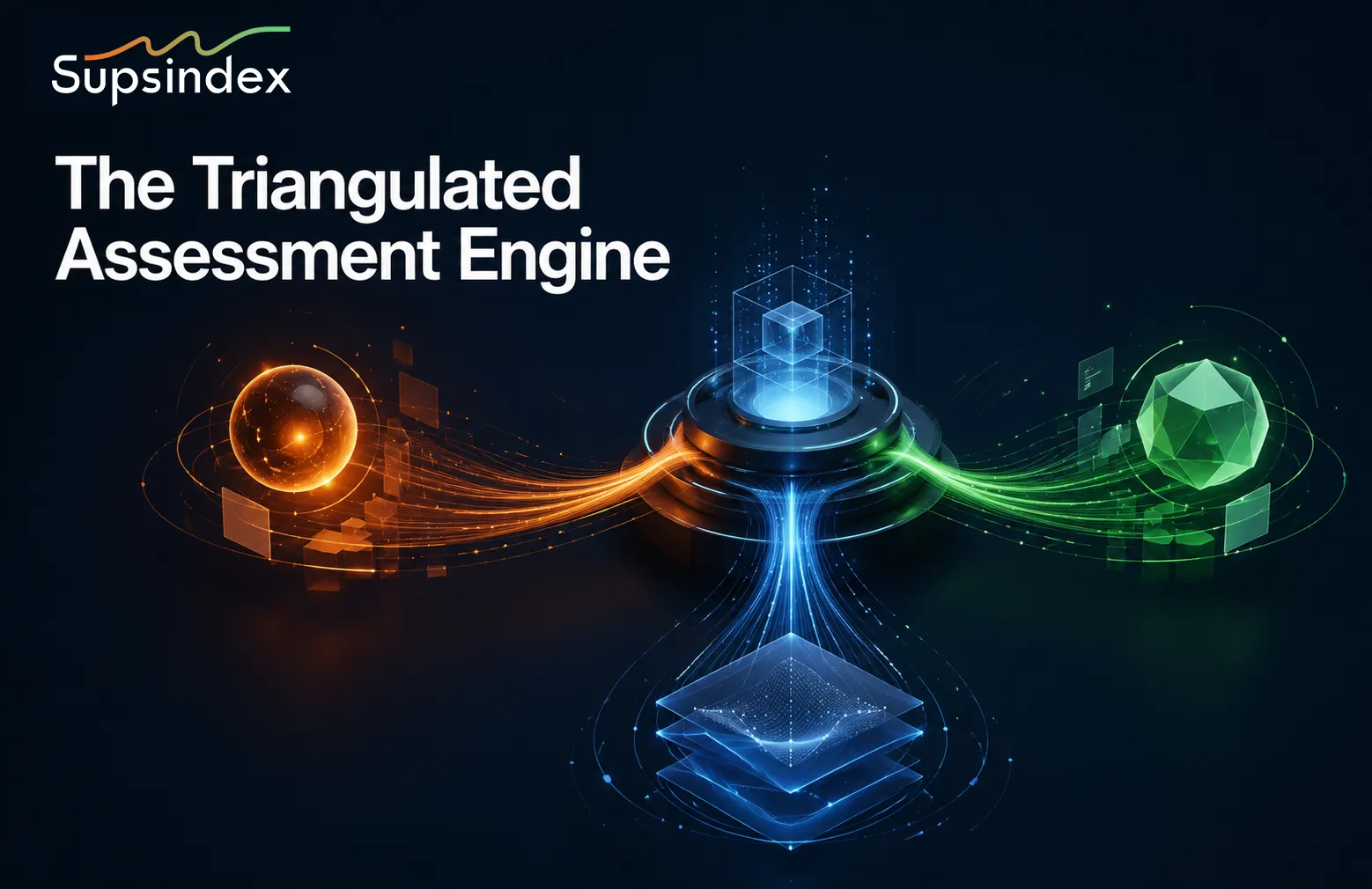
At the center of the Founders’ Discovery Project is a diagnostic suite built by Yanus Solutions and powered by three distinct but interconnected assessment engines:
- FPA: Founder Public Awareness
- GEB: General Entrepreneurial Behavior
- EEA: Ecosystem Environmental Awareness
Each engine examines a different dimension of founder capability.
FPA focuses on cognition and entrepreneurial knowledge. GEB evaluates behavior and decision-making under simulated pressure. EEA measures the founder’s understanding of the specific ecosystem in which the venture operates.
The value of the system comes from the relationship between these three dimensions.
Knowledge without effective behavior may not produce strong execution. Behavioral resilience without sufficient market or regulatory understanding may lead to confidently executed mistakes. Ecosystem knowledge may be valuable, but it cannot compensate entirely for poor judgment or weak entrepreneurial literacy.
By combining the three assessments, Supsindex seeks to construct a more complete view of founder readiness.
FPA: Measuring Practical and Decision-Ready Knowledge
The Founder Public Awareness assessment, or FPA, functions as the cognitive engine of the Supsindex framework.
It measures entrepreneurial literacy, signal-detection ability, and mental processing power. The objective is not merely to determine whether a founder has encountered certain concepts. It is to examine whether that knowledge is sufficiently developed to support real decisions.
Entrepreneurship requires founders to interpret large volumes of information, distinguish meaningful signals from noise, identify relationships between different variables, and make decisions before every uncertainty has been resolved.
A founder may know the terminology of fundraising while misunderstanding how investment structures affect future control. Another may understand the general idea of market validation while failing to recognize weak evidence or misleading customer signals.
The distinction between knowledge and decision-ready knowledge is important.
Information only creates operational value when a founder can apply it under realistic conditions. FPA is therefore intended to help reveal whether the founder’s cognitive preparation is practical rather than superficial.
Within the Founders’ Discovery Project, researchers can compare FPA results with subsequent founder behavior and venture performance. This creates an opportunity to investigate whether stronger pre-assessed entrepreneurial knowledge correlates with better strategic decisions, more efficient problem-solving, or more effective use of resources.
GEB: Observing Behavior Under Simulated Pressure
The General Entrepreneurial Behavior assessment, or GEB, forms the behavioral component of the system.
Founders are placed in simulated crisis situations designed to examine decision-making quality, resilience, and susceptibility to cognitive biases.
This approach addresses a major limitation of conventional founder evaluation: people do not always behave as they describe themselves.
A founder may believe that they remain rational under pressure. A team may describe itself as adaptable, evidence-driven, or resilient. However, these characteristics become meaningful only when they can be observed through decisions made under difficult conditions.
Simulated scenarios allow the assessment to move beyond self-description.
The Founders’ Discovery Project focuses on 12 specific entrepreneurial behavioral codes. Each code is tested through a matrix of four distinct situational questions, enabling the system to examine how behavioral patterns appear across different circumstances rather than relying on a single response.
The research objective is to determine how these behavioral codes relate to startup survival and operational execution.
For example, certain responses may indicate vulnerability to bias, poor prioritization, excessive confidence, delayed decision-making, or ineffective reactions to uncertainty. Other patterns may demonstrate resilience, contextual judgment, disciplined reasoning, or an ability to update decisions when new evidence becomes available.
Through six months of observation, researchers can investigate whether the behavioral patterns identified in the assessment continue to appear in real founder activity.
This is one of the central contributions of the project: connecting controlled assessment results with behavior observed in active startup environments.
EEA: Measuring Readiness for a Specific Ecosystem
The Ecosystem Environmental Awareness assessment, or EEA, evaluates contextual readiness.
Startup outcomes are not determined only by the quality of an idea or the personal ability of the founder. Every company operates inside a specific economic, regulatory, cultural, institutional, and competitive environment.
A strategy that works effectively in one ecosystem may fail in another.
Founders entering new markets must understand local customer behavior, regulatory requirements, institutional relationships, capital availability, market-entry barriers, and the organizations or individuals who influence ecosystem activity.
EEA examines this hyper-local dimension of founder readiness.
It assesses the founder’s knowledge of local market dynamics, regulatory conditions, and key ecosystem players. The purpose is to determine whether the team understands the environment in which it intends to execute.
This assessment can be especially valuable for founders entering unfamiliar regions, international teams expanding into new countries, and support organizations working with culturally diverse cohorts.
Within the Founders’ Discovery Project, EEA data can be compared with indicators such as market-entry efficiency, resource allocation, stakeholder engagement, and capital utilization.
The project therefore asks whether quantified ecosystem awareness can help explain why some teams navigate local conditions more effectively than others.
Why the Three Assessments Must Be Studied Together
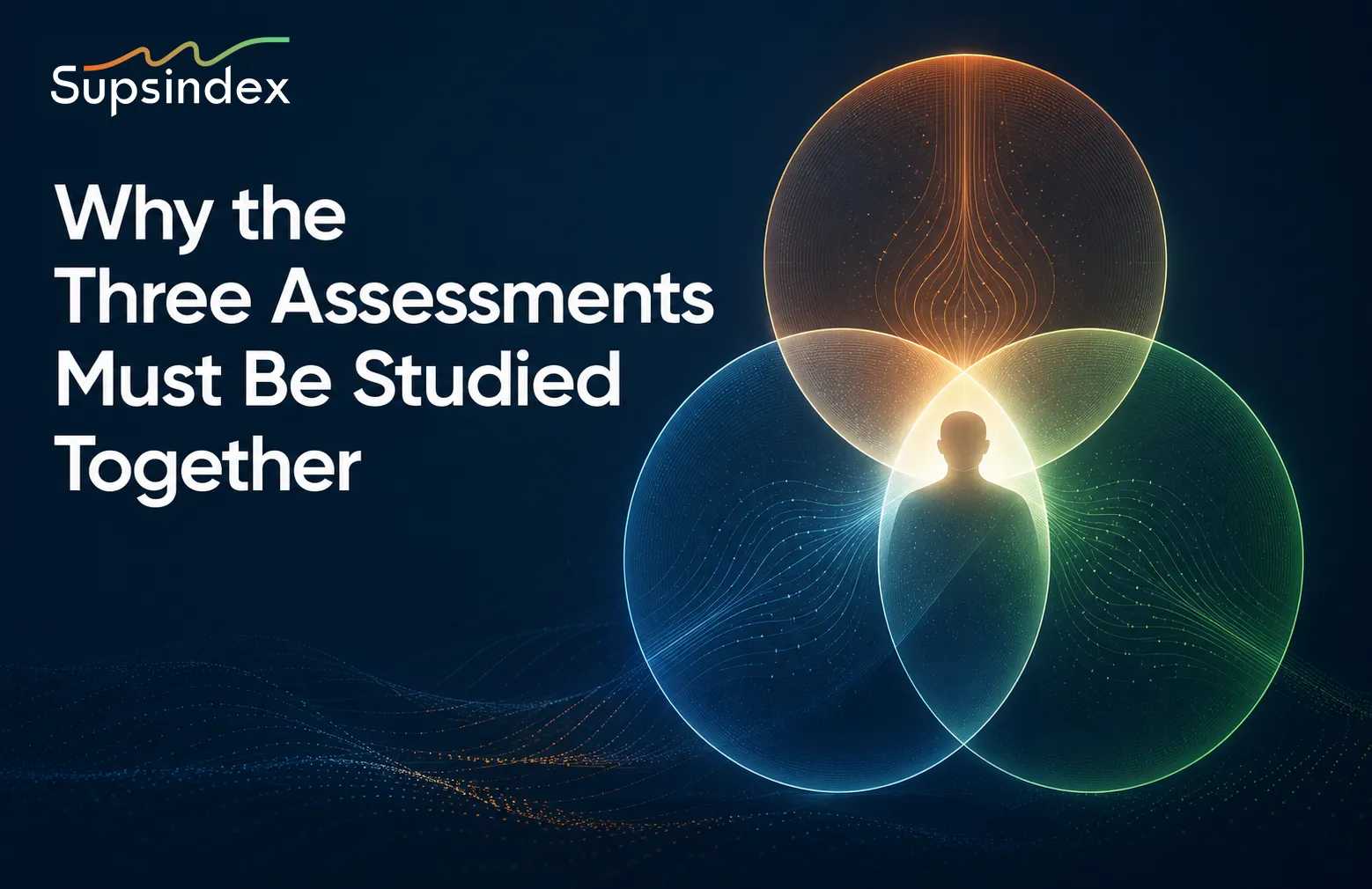
Each assessment engine provides valuable information independently. However, the central hypothesis of the project depends on their combined use.
Consider a founder with strong FPA results but weaker GEB results. That founder may possess significant entrepreneurial knowledge while struggling to apply it effectively under pressure.
A founder with strong GEB results but lower EEA performance may demonstrate resilience and decision-making capability while lacking essential understanding of the local operating environment.
Another founder may understand the ecosystem well but have gaps in both entrepreneurial literacy and crisis decision-making.
These combinations produce different risk profiles.
A single general score may conceal these differences. A triangulated model instead allows researchers and decision-makers to examine the relationship between cognitive power, behavior, and context.
This creates the possibility of more targeted intervention.
One founder may benefit from additional market and regulatory preparation. Another may require support related to bias awareness or crisis decision-making. A third may need to strengthen specific areas of entrepreneurial knowledge before entering a high-stakes negotiation or fundraising process.
The model is therefore not only intended to evaluate founders. It is also designed to generate information that can help founders improve.
The Defining Research Question
The Founders’ Discovery Project is structured around one defining question:
When Supsindex measures cognitive power, specific knowledge, behavioral codes, and ecosystem fit, exactly how—and by how much—does that measurement positively affect the startup ecosystem?
This question contains two distinct areas of investigation.
The first concerns correlation. Do the characteristics measured by Supsindex correspond with real-world founder decisions, execution quality, resource efficiency, or venture outcomes?
The second concerns practical impact. Does access to this assessment data help founders, accelerators, incubators, researchers, or other ecosystem stakeholders make better decisions?
The project does not treat these outcomes as already proven.
Instead, it establishes a structured pipeline through which assessment data can be compared with observed founder behavior over time. Academic researchers can field-test theories using active startup cohorts rather than relying entirely on abstract models or retrospective accounts.
Three hypotheses are particularly important.
Behavioral Alignment
The project seeks to determine whether the 12 entrepreneurial behavioral codes measured through situational questions operationally influence startup survival and execution.
Researchers can examine whether assessed behavioral tendencies appear during actual founder decisions and whether particular patterns are associated with stronger or weaker operational outcomes.
Knowledge Versus Execution
The project also tests whether deep, pre-assessed entrepreneurial knowledge correlates with tangible venture results.
Founders often possess knowledge that does not translate into action. The research can therefore examine both what founders understand and how effectively they apply that understanding.
Contextual Efficiency
The third area concerns ecosystem awareness.
The project investigates whether founders with stronger quantified knowledge of their local environment enter markets more efficiently, use capital more effectively, and navigate institutional or regulatory conditions more successfully.
Together, these areas connect measured traits with real-world decisions and, ultimately, venture outcomes.
How the Founders’ Discovery Project Works
The initiative operates through a formal structure designed to produce diverse datasets and maintain a high level of completion throughout the research period.
Participation begins with a three-party Memorandum of Understanding between Supsindex, a participating incubator or accelerator, and an academic research partner.
This structure establishes the roles of the organizations involved and creates a formal basis for assessment, observation, and research.
The project then progresses through five main stages.
1. MoU Formation
Supsindex, the incubator or accelerator, and the academic research partner establish a three-party agreement.
This provides the institutional framework for the project and aligns the participating organizations around the research process.
2. Founder Cohort Onboarding
Founding teams are introduced through participating incubators and accelerators across five global regions.
The project is designed to include a diverse and representative cohort, allowing researchers to examine founder readiness across different cultural, economic, and ecosystem conditions.
3. Triple Assessment
Participating founders complete the FPA, GEB, and EEA assessments under the direct supervision of their incubator or accelerator.
This produces the initial dataset relating to cognitive readiness, entrepreneurial behavior, and ecosystem awareness.
4. Six-Month Observation
Supsindex helps professionals track founder behavior and problem-solving methods over a six-month period.
The objective is to capture high-frequency, real-world information that can be compared with the founders’ original assessment results.
This extended observation period is essential because startup behavior cannot be understood through a single event. Founders face changing conditions, unexpected problems, new information, resource limitations, and evolving relationships throughout the venture process.
5. Research Output
The resulting insights are synthesized into validated datasets and research outputs.
Academic partners can use the findings to examine theories, prepare papers, and contribute to research connected directly with active startup and venture capital environments.
The process creates a bridge between initial assessment and longitudinal observation.
Instead of evaluating founders once and assuming the result remains meaningful, the project investigates how assessment data relates to behavior over time.
A Global, Multi-Institutional Research Model
The Founders’ Discovery Project is designed for simultaneous activity across five regions:
- North America
- Europe
- Asia
- The Middle East and North Africa
- South America
Global participation is important because founder readiness does not exist independently of culture or environment.
Behavior considered effective in one ecosystem may be interpreted differently in another. Regulatory knowledge is inherently local. Access to capital, institutional support, customer expectations, risk tolerance, and business practices also vary significantly across regions.
A multi-regional dataset creates an opportunity to study both universal and localized patterns.
Researchers may identify capabilities that remain important across ecosystems while also revealing factors that require cultural or regional calibration.
The project is supported by four core pillars:
- The Supsindex Scientific Department
- Leading incubators and accelerators
- Local universities
- Dedicated researchers
Each pillar performs a different function.
Supsindex provides the assessment framework and scientific infrastructure. Incubators and accelerators connect the project with active founding teams and supervise cohort participation. Universities contribute academic capacity and institutional research support. Dedicated researchers analyze the relationship between assessment results and real-world founder behavior.
No single party could produce the same result independently.
The value of the project comes from combining assessment technology, operational access, academic methodology, and longitudinal observation.
Benefits for Researchers and Universities
For academic researchers, the project offers access to structured data connected to active entrepreneurial environments.
Entrepreneurship research can be difficult because founders operate in uncertain conditions, startup teams change quickly, and real-time behavioral data may be difficult to collect consistently.
The Founders’ Discovery Project provides a formal structure for field-testing theories.
Researchers can examine founder cognition, behavior, ecosystem knowledge, and venture activity over a defined six-month period. They can compare assessed characteristics with observed decisions and investigate whether specific patterns appear across industries, cultures, maturity levels, or regional ecosystems.
The resulting research may support academic papers with strong relevance to the venture capital and startup sectors.
Because the project connects theoretical models with active founder cohorts, its outputs can contribute to both academic discussion and operational practice.
Universities also gain an opportunity to participate in an international research pipeline involving startup support organizations and entrepreneurial assessment data.
This can strengthen collaboration between academic institutions and the wider innovation ecosystem.
Benefits for Incubators and Accelerators
Incubators and accelerators make high-impact decisions with limited information.
They select founders, allocate mentors, design educational programs, monitor cohort performance, and determine which teams require additional support. These decisions often take place before substantial performance data exists.
The Founders’ Discovery Project gives participating organizations access to an additional evidence layer.
By using the triple assessment, decision-makers can evaluate cohorts through cognitive, behavioral, and contextual dimensions. Localized cultural and ecosystem metrics can help prevent programs from relying entirely on generalized founder profiles.
Assessment results may also support more targeted program design.
Instead of delivering identical support to every participant, an incubator may identify different capability gaps across the cohort. Some founders may require ecosystem education. Others may benefit from behavioral coaching, decision-making simulations, or deeper entrepreneurial preparation.
Participation also places incubators and accelerators among the early organizations investigating quantified ecosystem-level capability measurement.
However, the project’s value is not based solely on access to a new tool. Its greater significance lies in helping these organizations contribute to the validation of a potential global standard for founder assessment.
Benefits for Supsindex
For Supsindex, the project creates a continuous validation and calibration pipeline.
Assessment models must be examined against real-world performance. Without longitudinal evidence, even a sophisticated framework risks remaining disconnected from actual founder behavior.
The six-month observation period allows Supsindex to compare measured characteristics with subsequent decisions and outcomes.
These findings can help the scientific department identify where the assessments are accurate, where additional contextual calibration may be required, and how different variables interact across industries and regions.
This process supports the continuous improvement of the FPA, GEB, and EEA engines.
More importantly, it subjects the underlying model to external academic investigation.
The goal is not merely to produce additional assessment data. It is to determine what that data means, how reliably it predicts or explains founder behavior, and where its practical limitations may exist.
Intellectual Property and International Recognition
The assessment framework underlying the Founders’ Discovery Project is based on a proprietary, patent-protected methodology developed for entrepreneurial capability measurement.
The methodology incorporates personalized digital clones and behavioral simulation environments to examine founder characteristics under structured conditions.
Its capability assessment patent received a gold medal at the Silicon Valley International Invention Festival.
The project materials also identify international patronage from the International Federation of Inventors’ Associations, a Geneva-based public utility organization supporting innovation internationally.
This recognition provides an important foundation for the project, but the Founders’ Discovery Project moves the framework into another stage of development.
Awards and intellectual property can recognize novelty. The project’s next objective is real-world validation.
By collaborating with researchers, universities, incubators, accelerators, and active founding teams, Supsindex is creating a process through which the framework can be examined over time and across multiple ecosystems.
Building a More Evidence-Based Startup Ecosystem
The startup world does not lack founder opinions.
Investors, mentors, accelerators, academics, and experienced entrepreneurs all have theories about what makes founders successful. Many of those theories are valuable. However, they may be based on limited samples, personal experience, retrospective interpretation, or observations from specific ecosystems.
The Founders’ Discovery Project creates an opportunity to test these ideas systematically.
It asks whether founder readiness can be measured before critical venture events. It examines whether cognitive, behavioral, and contextual data corresponds with real execution. It also investigates whether access to that data helps institutions provide better support and make more informed decisions.
The project does not attempt to remove uncertainty from entrepreneurship.
Startups will always operate in changing markets. Unexpected events, competitive responses, technological developments, funding conditions, and human relationships will continue to affect outcomes.
But uncertainty does not eliminate the value of measurement.
When decision-makers understand more about the founders they support, they can identify risks earlier. When founders receive clearer information about their own capabilities, they can prepare more effectively. When researchers gain access to structured, real-world data, they can produce findings that are more closely connected to entrepreneurial practice.
The result could be a healthier relationship between measurement, validation, and investment.
Join the Founders’ Discovery Project
The Founders’ Discovery Project invites ecosystem managers, academic researchers, universities, incubators, and accelerators to participate in developing a more data-driven standard for founder validation.
For researchers, it is an opportunity to examine entrepreneurial theories using structured assessments and real-world observation.
For incubators and accelerators, it offers a new perspective on cohort evaluation, founder development, and localized capability measurement.
For participating founders, it creates the possibility of identifying cognitive, behavioral, and ecosystem-related blind spots before those weaknesses become costly operational problems.
For the global startup ecosystem, the project represents a step toward replacing unsupported assumptions with measurable evidence.
The defining question is ambitious: can founder readiness be measured in a way that meaningfully improves entrepreneurial decisions and outcomes?
Answering it requires more than a new assessment.
It requires cooperation between science and practice, between universities and startup programs, and between structured measurement and real founder experience.
That is the purpose of the Founders’ Discovery Project: to measure what matters, validate it in the real world, and build a stronger evidence base for the future of entrepreneurship.
