

To navigate the modern venture landscape and eliminate cognitive bias, businesses must utilize the top employment screening companies for startups 2026.
Top employment screening companies for startups 2026
The most turbulent boom-and-bust cycle in recent times occurred within the venture capital landscape. A total of $1.7 trillion was invested globally into venture capital during the period of 2019 to 2024. However, retrospective analyses reveal a profound capital inefficiency: an estimated $700 billion to $1.2 trillion constituted “wasted capital,” failing to return the principal investment. While the industry has long accepted a high failure rate as the necessary cost of power-law dynamics—where a few outliers generate the vast majority of returns—a deeper causal decomposition challenges this complacency. A significant portion of this loss was not strategic experimentation gone awry; it was avoidable waste stemming from predictable deficits in human capital, execution, and cognitive bias.
In response to this reckoning, the infrastructure of building companies has fundamentally shifted. By 2026, the employment screening landscape has evolved far beyond its origins. No doubt about it, startups have evolved far beyond viewing background checks as a necessary chore. They are embracing complex systems which are focused on API integration, broad global coverage, skills certification using artificial intelligence, and post-hiring surveillance. In such a climate where nothing is too much to examine, finding out about the Top employment screening companies for startups 2026 is no longer just a task but a strategic endeavor. Analysis of the Top employment screening companies for startups 2026 reveals much about the ways in which the contemporary business world avoids risk through its operations starting right at the recruitment phase. As we analyze the Top employment screening companies for startups 2026, we must look beyond standard criminal checks and understand how technology is fundamentally altering the way human potential is quantified, vetted, and deployed.
Automated candidate screening solutions for startups
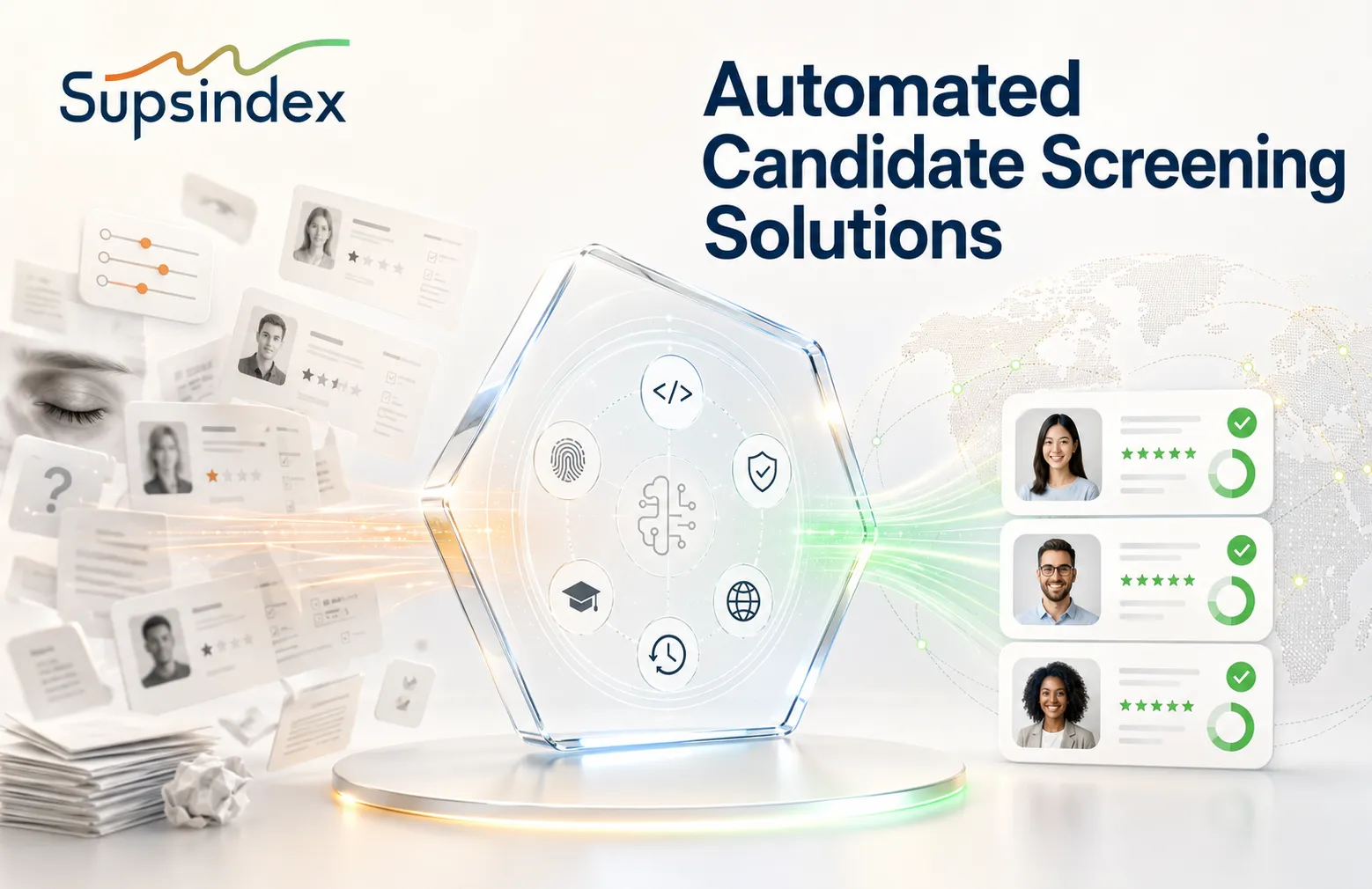
It is due to the high number of applications pouring into the contemporary technological environment that the conventional, manual way of handling matters by the human resources team has become utterly redundant. Automated candidate screening software for startups has come in handy to make up the base for modern recruiting stack technology, bringing a complete change into the hiring processes. Previously, it required the efforts of specially recruited compliance officers as well as HR experts who worked for thousands of hours in verifying candidates’ credentials, checking references, and cross-checking information in global databases. Automated candidate screening software for startups has minimized this effort. As a matter of fact, Checkr works on an API-first platform that has been built for developers. Consequently, tech startups have found a way of integrating background checks directly into their ATS systems.
Beyond mere efficiency, the true scientific and business value of Automated candidate screening solutions for startups lies in their capacity to reduce common human prejudices. Human evaluators are notoriously susceptible to cognitive biases—such as the halo effect, confirmation bias, and affinity bias. The fact that these biases end up filtering away extremely talented individuals on the basis of irrelevant factors such as geographic location, alternative academic background, or even fatigue from the part of the person doing the review is unintentional. By using the impartiality of an algorithm to their advantage, startup automated candidate screening systems are able to set a consistent standard for all candidates.
Moreover, the technology trends behind such solutions have developed. Headless automation and constant monitoring are already in use. Instead of creating a single, once-and-for-all profile of a person, solutions like Vetty employ native technology for continuous post-hire monitoring, which monitors constantly sanctions, licenses expiration dates, and other regulatory data. Meanwhile, startups with global staffing needs have services like Veremark, where they are able to focus on the issue of international compliance (such as GDPR or PDPA). It provides candidates with real-time updates in order to reduce the loss of high-class remote workers at the end of the recruitment pipeline due to uncertainty.
AI resume screening startup
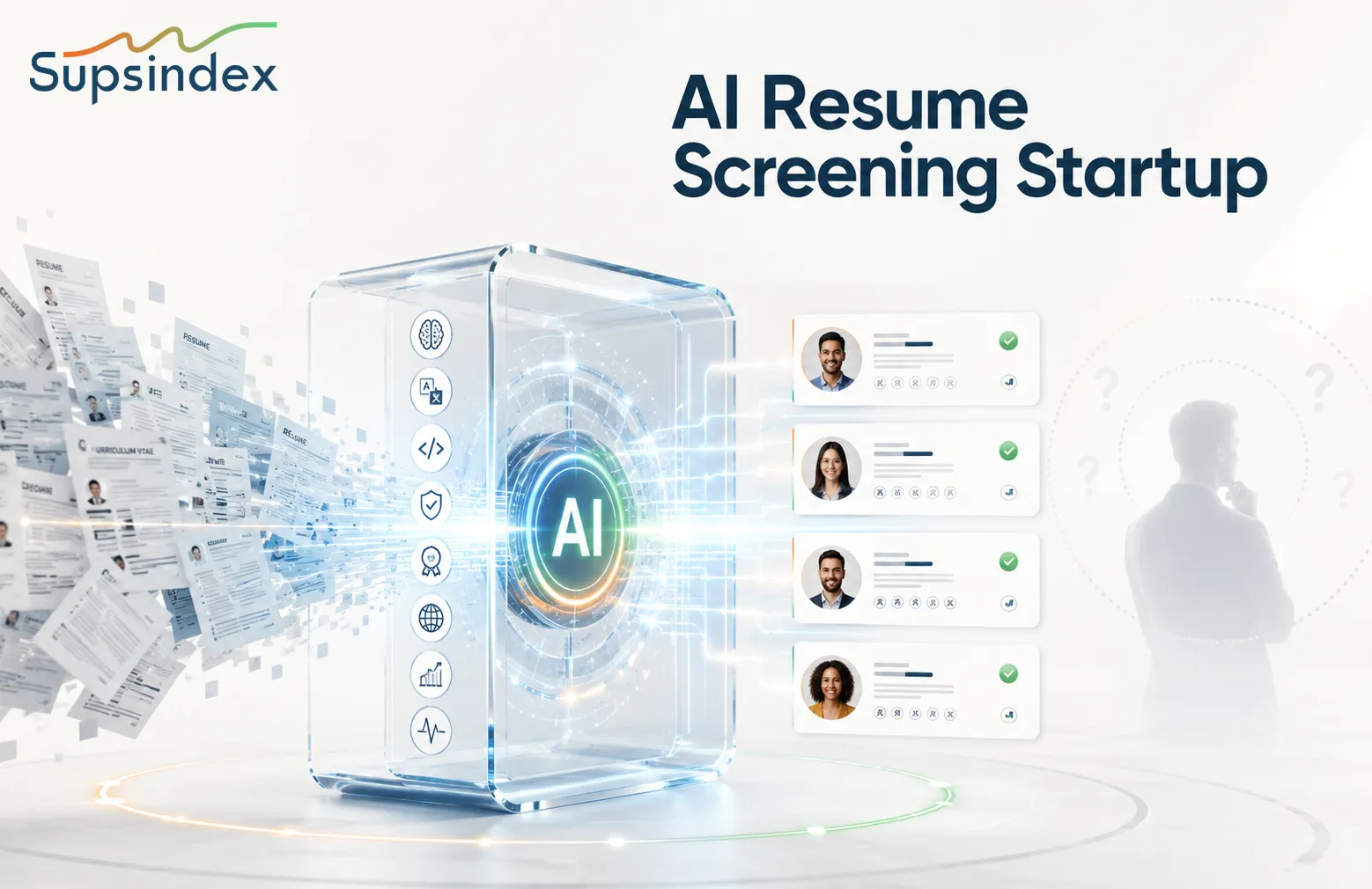
As the ecosystem evolves to predict future performance from historical compliance, cognitive assessment is emphasized as the new approach to evaluate individuals. The engagement of an AI-based resume screening service has become a norm when evaluating core employees. An AI-based resume screening service employs natural language processing (NLP) and machine learning to go beyond keyword scanning and assesses deeper context within which candidates have worked. In this regard, these services can even detect sophisticated formatting decisions, for instance, the alignment of the left side of resumes with special certificates by IBM and Google suggests successful engineers.
When observing the landscape of any top-tier AI resume screening startup, the available tools are generally categorized by the type of workforce they serve and their underlying technologies. For remote and international talent, platforms like HireRight offer verifications in over 200 countries, catering to complex, multinational teams. For the gig economy and high-volume hiring, Checkr processes thousands of transient worker checks rapidly. For core startup teams, platforms like Certn offer a fully digital, mobile-friendly approach designed to reduce time-to-hire by up to 80%. When categorized by technology, we see AI-driven skills and behavioral screening taking the lead. Platforms like WeCP (We Create Problems) utilize an “AI Copilot” to generate role-specific coding and aptitude assessments. Vervoe uses advanced machine learning to grade these assessments automatically, testing applicants in realistic, simulated environments rather than relying on their self-reported resumes. Finally, blockchain and digital credentialing tools like KarmaCheck leverage immutable ledgers to accelerate the verification of specialized degrees and licenses.
There is, however, a huge contradiction that emerges from such a highly-developed system. On the one hand, when a resume-screening firm that uses artificial intelligence can give unbelievable predictive power in terms of assessing how technically compatible and what kind of behavior an applicant is likely to show during the work process, on the other hand, there seems to be an absolutely huge gap in the area of evaluating the creators of the startup. While using high-end analytics for examining the resume of a middle-management engineer, they still have to make decisions based solely on their gut feelings and charismatic presentations.
The lack of an integrated and scientific assessment framework that would be applied to founders means that the people that require it—the incubators, accelerators, and any other types of Investor Profiles—each come up with their own disjointed systems. Some make use of static personality quizzes such as Myers-Briggs (that were never intended to be used in the high stress environment of starting a business), while others resort to using proprietary instruments. Needless to say, such an approach is extremely ineffective and fraught with cognitive biases. The ecosystem has gotten really good at assessing employees, but not so much the entrepreneur.
Soft Power Assessment in the process of screening startup applications
The way to overcome this vulnerability lies in a change of approach, where the assessment of what the entrepreneur claims to know about his business venture would be replaced by the assessment of the manner in which he operates under conditions of intense pressure. As luck would have it, the precise solution to this dilemma is located in the area of Startup application screening through soft-power Assessment. The Supsindex System can be regarded as the leading tool in this regard.
Founders’ evaluation using résumés and unstructured interviews is fundamentally wrong, since the résumé is nothing but a well-performed act, where the person attempts to hide his/her shortcomings while showcasing his/her strengths, whereas an interview is more like an act itself, where the charm of the person helps him/her hide his/her incompetence. A well-executed act in an interview does not imply that the founder would be able to manage liquidity pressures effectively. In the context of evaluating the suitability of startup applications via Assessment, one needs to move beyond these acts, since roughly 60-70 percent of capital allocation problems in startups arise from the mistakes made by the founders.
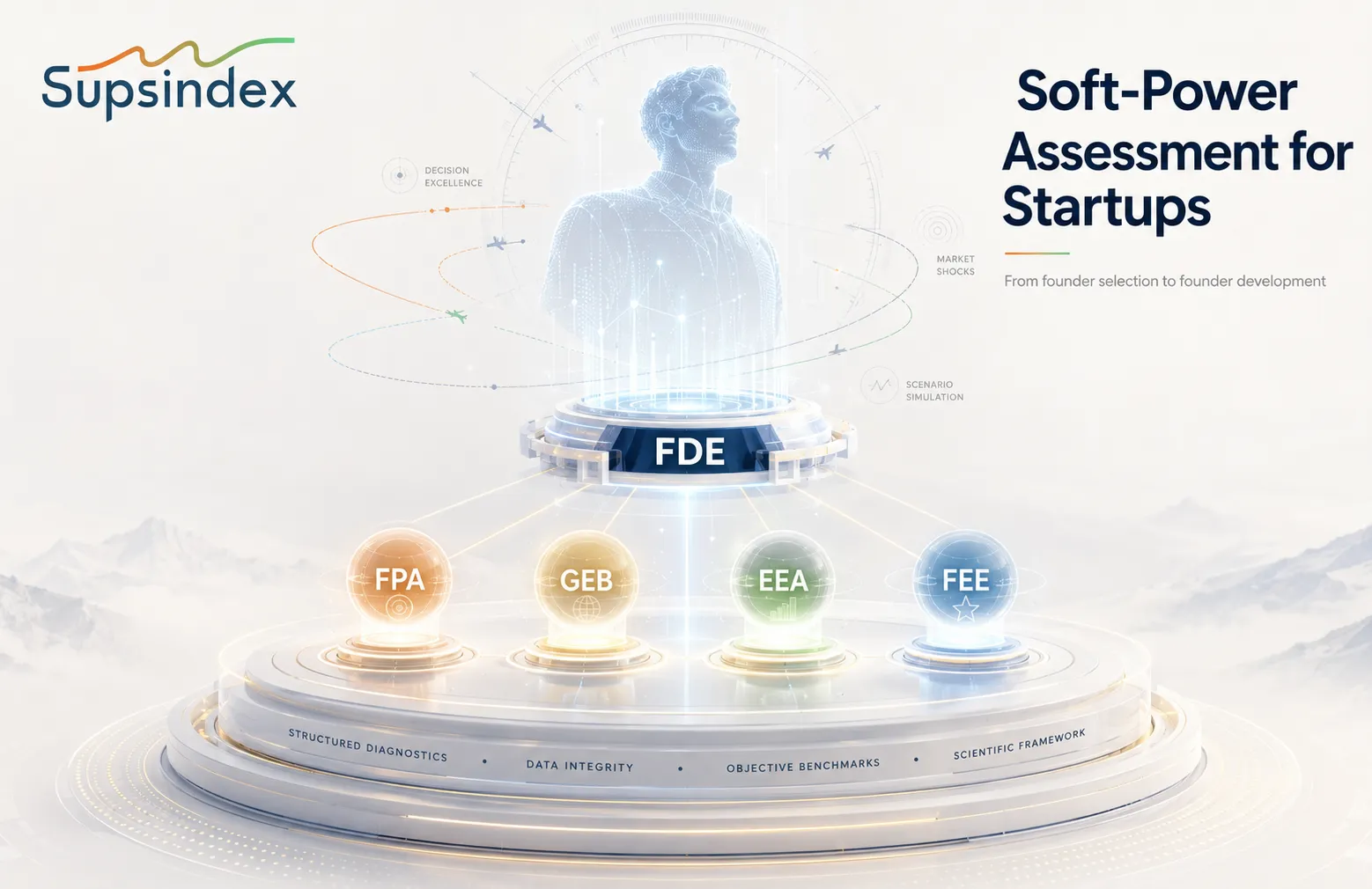
These vulnerabilities can be identified using Supsindex’s hierarchical, customized set of diagnostic tools. Foundation is a Founder Public Awareness (FPA). This comprehensive test consists precisely of 78 questions, with three noise questions incorporated into it specifically to test the candidate’s level of concentration and avoid any form of distraction during the test. The test measures the initial level of entrepreneurial awareness in a variety of areas such as financial understanding, legal awareness, and go-to-market plan. GEB index determines a founder’s attitude, integrity, and strength as compared to mere calculated risk taking and reckless conduct.
Moreover, the Startup selection via Soft Power Assessment understands that implementation can be notoriously local. For example, the Ecosystem Environmental Awareness (EEA) score measures how well a founder knows his/her particular industry and ecosystem. An approach that works in Silicon Valley might not work in Berlin because the EEA makes sure that the founder knows about local regulatory frameworks, Investor Profiles, and infrastructure connections. Importantly, the Founder Ecosystem Engagement (FEE) score assesses how well the team works together. Since team disagreement is One of the major causes of failure among startups, FEE is arguably the single most important thing that should be measured.
The culmination of the whole process involved in the Soft-Power Assessment of Startups is known as the Founders’ Decision Excellence (FDE). Supsindex moves the process out of the realm of a typical survey process by turning it into a simulation flight experience of sorts for the entrepreneurs. This is meant to help the founder face all sorts of challenges, including market disturbances, interruptions of the supply chain, and lack of cash flow. The end result should be creating what is called the Personalized Digital Clone of the entrepreneur –his or her best self, according to the data available – and compare him or her against the clone’s decisions.
Compared to any existing incubator benchmark, this model is unparalleled. Startup application screening by soft-power Assessment is not merely a diagnostic tool; it is a continuous growth engine. It transforms the subjective art of “founder picking” into the objective science of “founder developing.” These incubators and venture capitalists that employ Supsindex in their activities have the opportunity to gain an uncommon insight into the quality of the structure of human capital being invested. On top of all existing techniques targeting the general workforce, Supsindex is the first solution offering science-based assessment of upper management.
Finally, as we find our way through the complicated world of Innovation as a Service (IaaS) and its many ventures, the dependence on intuition becomes too costly. Top employment screening companies for startups 2026 clearly show that using AI, data, and continuous tracking allows perfect optimization of hiring within the whole workforce. However, when talking about the alpha of venture capital, the ability to correctly assess the founders becomes the key factor. By moving the focus of the ecosystem from the subjective intuition to simulation metrics, Supsindex makes sure that capital is indeed the true catalyst for unleashing human potential.
Find out how strong your Soft Power skills really are, detect your blind spots before someone else does, and get ready for Leadership Flight Simulator. Learn more about Supsindex assessments now!
