

Achieving startup ecosystem fit is the ultimate competitive advantage for founders scaling across borders, requiring more than just talent—it requires deep local integration.
Startup Ecosystem Fit
The global development of startups and technological entrepreneurship has catalyzed a profound shift in how human capital generates economic value. Simultaneously, we have witnessed the entry of different countries into this concept, leading to the emergence of various methods tailored to local contexts. These structural methods are heavily shaped by the type of overarching government policies, the current socio-economic needs of the population, and fundamentally, the intrinsic culture and historical behavioral patterns of the people within those borders. Since approximately 2012, specialized academic and commercial institutions have slowly been established to conduct rigorous ecosystem studies in the international startup space. Entities like Startup Genome, Crunchbase, and numerous university-backed research centers have drawn global attention to these localized ecosystems, systematically mapping their nuances and highlighting their distinct, geographical differences in problem-solving and venture creation.
Needless to say, there would have been much improvement in operational efficiency on the worldwide front due to the empirical mapping mentioned above. “Best practices” for venture creation were no longer restricted within elite cities but diffused rapidly throughout the planet, forming a decentralized network of innovation ecosystems. Within this highly democratized system, it seems that we are currently operating in a period when aspiring entrepreneurs have unparalleled freedom of movement, yet the challenge of achieving true startup ecosystem fit remains the primary barrier to international success.
Startup Visa Soft Skills Requirements

A founder might possess elite technical capabilities, but without the correct ecosystem environmental awareness, they are essentially operating in the dark. The difference between a founder who integrates seamlessly into a foreign market and one who fails often boils down to a specific set of soft skills: legal literacy, regulatory navigation, networking agility, and cultural intelligence. These are the specific startup visa soft skills requirements that modern admission committees are beginning to prioritize, as the assurance that such individuals will struggle with simple adaptation to the local environment is a major risk factor.
Ecosystem Environmental Awareness Factors
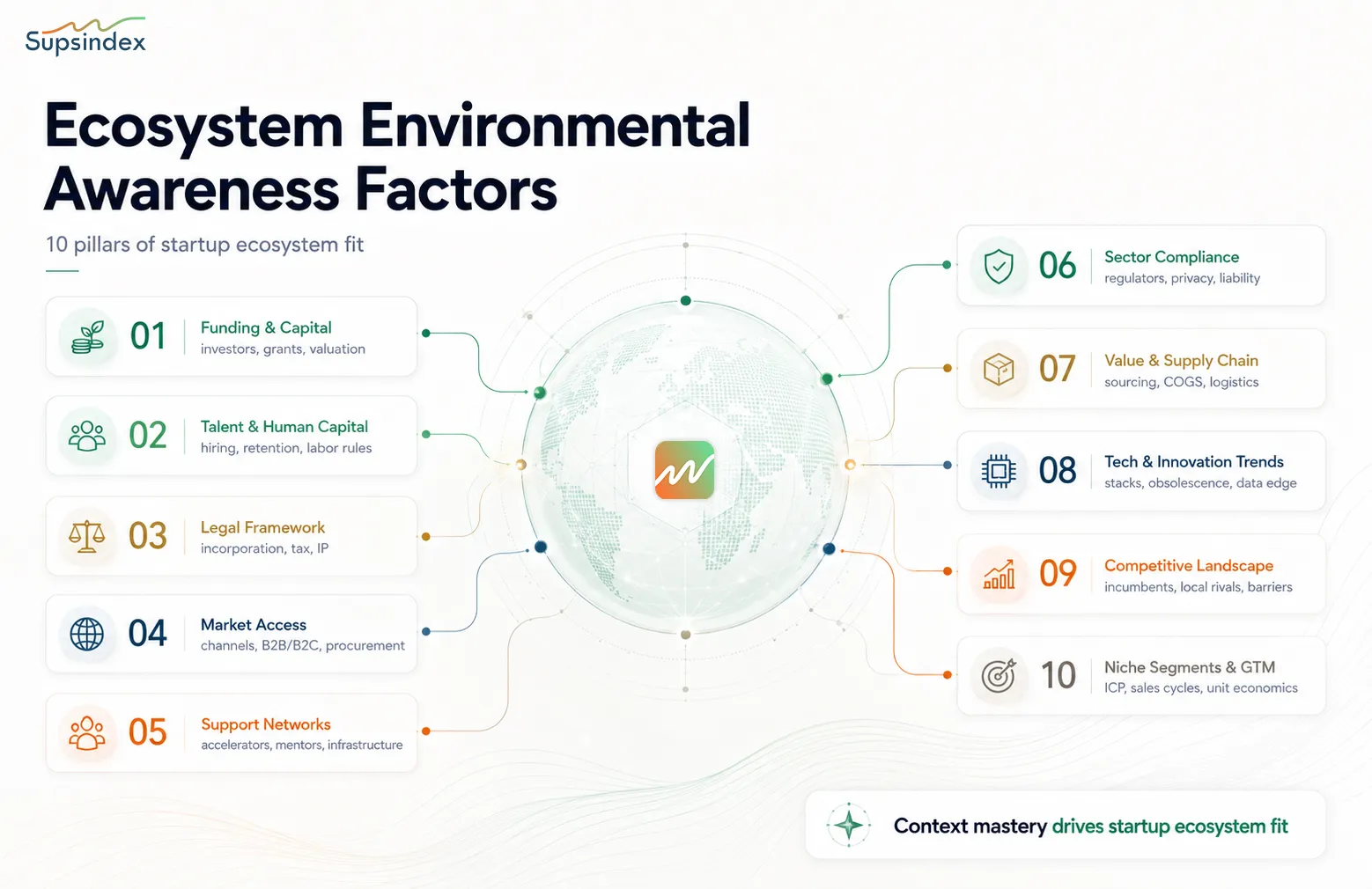
Additionally, through the explicit definition and quantification of such soft skills requirements as part of the Startup visa certification process, authorities provide a standardized, very fair criterion against which founders around the world can be judged. The element of ambiguity in the immigration process is therefore stripped away completely. It sends a strong message to regional investors, job marketplaces, and the government itself that founders who pass the certification criteria aren’t only talented developers but are also culturally and legally adept at building, scaling, and adding value to the existing ecosystem.
Business Environment Familiarity Tool
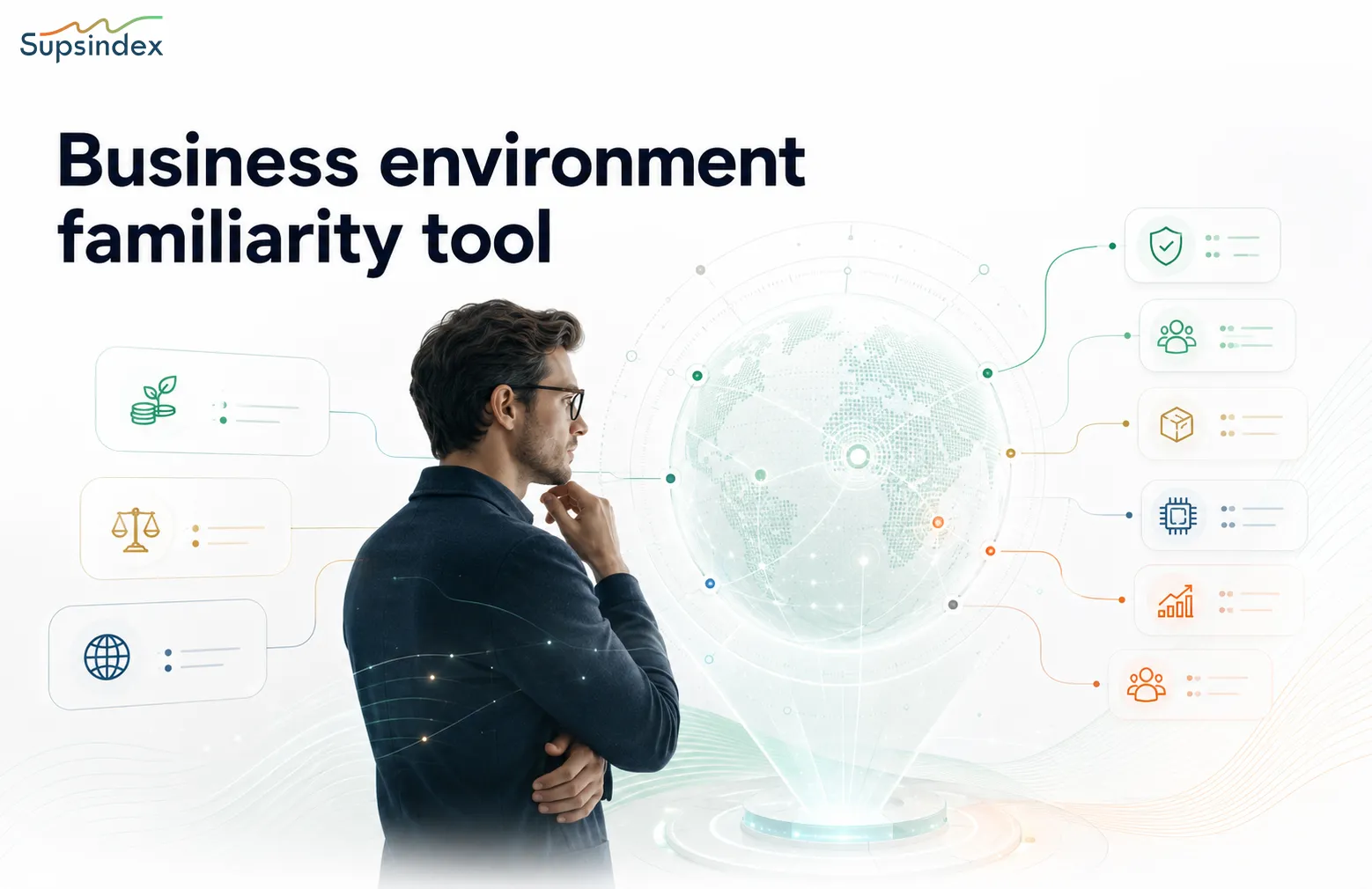
In summary, the days of basing one’s assessment of a founder’s ability to succeed internationally purely on intuition, an impressive presentation deck, or even some psychological tests are now well behind us. It’s time to get down to business. To maximize efficiency in capital allocation and make full use of the boundless possibilities of cross-border talent, ecosystem players everywhere need to demand a scientific, data-based method for assessing ecosystem integration. For visionary founders keen to demonstrate their international readiness, as well as institutions seeking to identify the top one percent of globally adaptable entrepreneurs, Supsindex invites you to learn more about its specialized ecosystem diagnostics, simulations, and human capital credentials.
