

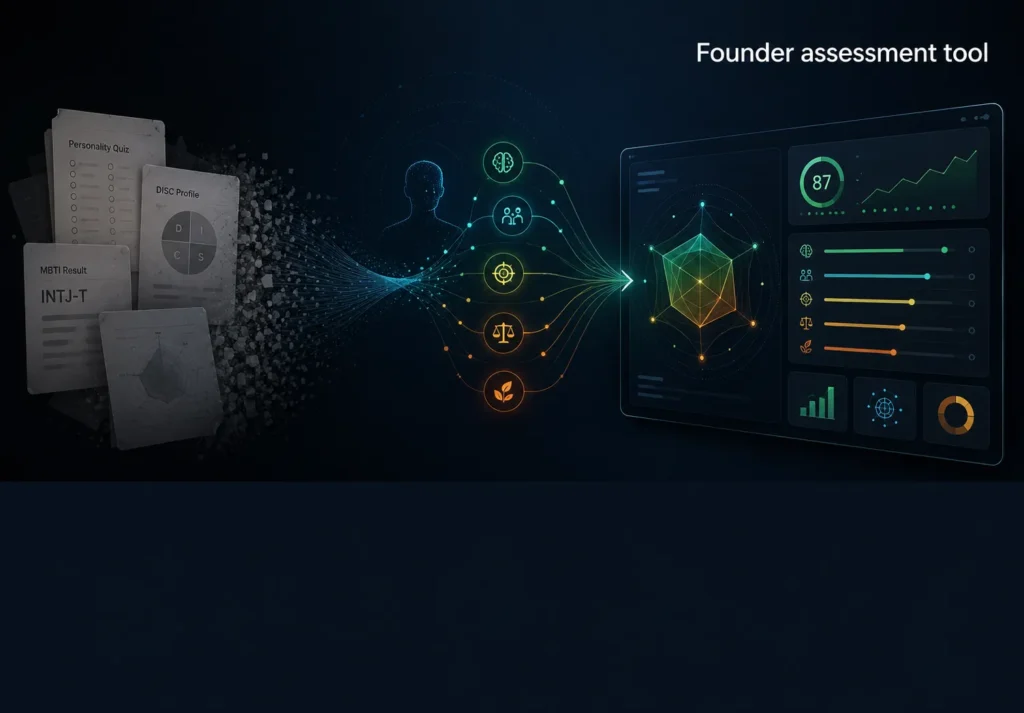
Finding the right founder assessment is critical in an ecosystem where the majority of wasted capital stems from preventable human errors rather than market conditions.
Founder Assessment: 7 Powerful Secrets to Best Startup ROI
In the contemporary world of venture capital, where listening to science and technology is seen as an improvement, going back to the topic of the nature of man and his natural abilities seems to be quite out of fashion. However, the fact remains that man creates science and technology and uses it as per his designs. Over the last few years, marked by a boom-and-bust period initiated by a decade of the policy of Zero Interest Rate (ZIRP), there occurred a kind of a Cambrian explosion of ventures in the world economy. Trillions of dollars have been invested. However, according to the latest scientific studies conducted at the Supsindex Scientific Department, the level of inefficiency of investments is incredibly high: up to 70% of the capital wasted due to losses without principal is not a natural consequence of risks associated with any strategic choice but the result of the mistakes of founders and teams.
When we examine the concept of what tools have been designed for this purpose so far, the results are largely inadequate. Looking closely at the competitor analysis and the broader competitor matrix of the current assessment industry, we find a landscape saturated with static personality quizzes. Traditional instruments such as the Myers-Briggs Type Indicator (MBTI), the DISC assessment, the Big Five, and various other generic psychometric evaluations are frequently shoehorned into the startup context. While these tests may provide a superficial glimpse into an individual’s basic psychological archetype, they suffer from severe operational weaknesses. When we examine the concept of what tools have been designed for this purpose so far, the results are largely inadequate. Looking closely at the competitor analysis and the broader competitor matrix of the current assessment industry, we find a landscape saturated with static personality quizzes. Traditional instruments such as the Myers-Briggs Type Indicator (MBTI), the DISC assessment, the Big Five, and various other generic psychometric evaluations are frequently shoehorned into the startup context. While these tests may provide a superficial glimpse into an individual’s basic psychological archetype, they suffer from severe operational weaknesses. When we examine the concept of what tools have been designed for this purpose so far, the results are largely inadequate. Looking closely at the competitor analysis and the broader competitor matrix of the current assessment industry, we find a landscape saturated with static personality quizzes. Traditional instruments such as the Myers-Briggs Type Indicator (MBTI), the DISC assessment, the Big Five, and various other generic psychometric evaluations are frequently shoehorned into the startup context. While these tests may provide a superficial glimpse into an individual’s basic psychological archetype, they suffer from severe operational weaknesses. When we examine the concept of what tools have been designed for this purpose so far, the results are largely inadequate. Looking closely at the competitor analysis and the broader competitor matrix of the current assessment industry, we find a landscape saturated with static personality quizzes. Traditional instruments such as the Myers-Briggs Type Indicator (MBTI), the DISC assessment, the Big Five, and various other generic psychometric evaluations are frequently shoehorned into the startup context. While these tests may provide a superficial glimpse into an individual’s basic psychological archetype, they suffer from severe operational weaknesses.
The primary weakness of these competitors is that they usually only go as far as analyzing the founder’s mindset, and they do so in a complete vacuum. They stay entirely away from evaluating applied entrepreneurial knowledge, financial decision effectiveness, and the crucial concept of ecosystem fit. Furthermore, competitors typically provide a static PDF report that offers no dynamic simulation of real-world pressures. In contrast, navigating the dark forest of early-stage entrepreneurship requires an understanding of how a founder will react under simulated market shocks and profound uncertainty. Therefore, the reliance on generic personality matrices must be replaced by a rigorous, data-driven founder assessment that measures actual behavioral propensity and situational judgment. Entrepreneurs, as the vital engine of societal advancement, stand in greater need than ever of steadfast pillars upon which to lean. Capital holders, ecosystem architects, and mentors all require reflective surfaces to navigate the path toward value creation with greater assurance. By scientifically measuring the soft power of decision-makers, we can prevent the squandering of human capital. The development of a truly predictive founder assessment is the fundamental paradigm shift needed to move the venture ecosystem from a model of capital-as-fuel to one of capital-as-catalyst for human potential.
Startup Evaluation Systems vs. Founder Assessment
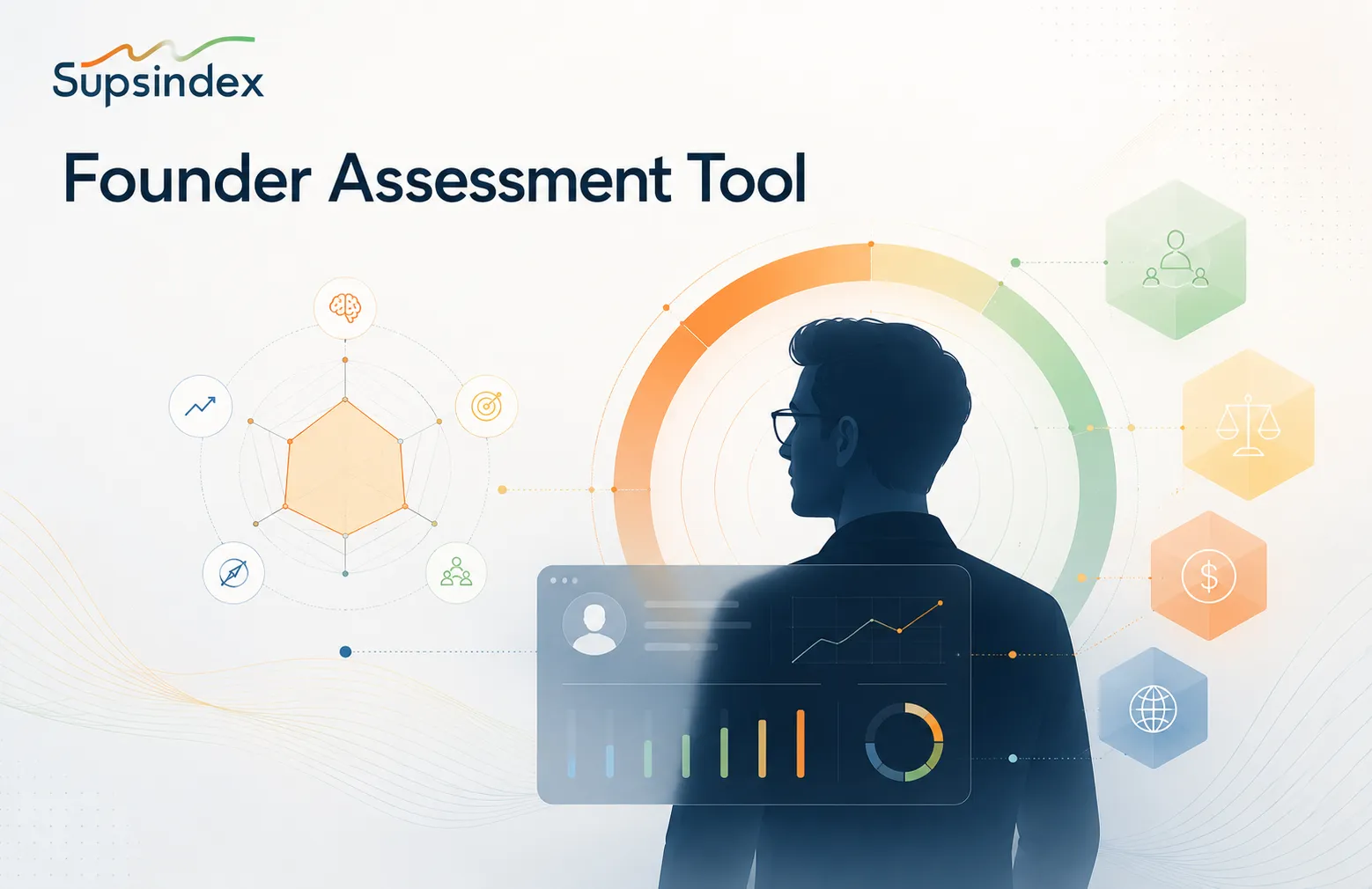
Historically, the venture capital ecosystem has focused its analytical rigor almost entirely on the venture itself, rather than the visionary driving it. To mitigate risk, investors and incubators have championed a wide array of Startup Evaluation systems designed to dissect the market, the product, and the financial architecture of a nascent company. These methodologies are undeniably vital for ensuring that capital is directed toward viable concepts. To understand the landscape, we must address the tools and models that examine other structural business issues across at least five distinct areas of venture development.
The first critical area is market validation and customer discovery. A preeminent example in this domain is the Mom Test, a methodological framework designed to evaluate whether a founder is asking the right questions to extract unbiased, truthful feedback from potential users. This system prevents founders from seeking false validation and ensures that a genuine market need exists before capital is deployed. The second area involves idea review and value proposition mapping. Frameworks such as Boom Nab or the widely used Lean Canvas provide a structured grid to review the core idea, forcing the entrepreneur to systematically articulate the problem, the solution, the unique value proposition, and the unfair advantage. The third area focuses on market readiness for entry and technological maturity. In deep-tech and hardware startups, evaluators frequently employ Technology Readiness Levels (TRL)—originally developed by NASA—to assess whether an innovation is merely a conceptual prototype or a scalable product ready for commercial deployment. The fourth area is business model viability. Tools like Strategyzer’s Business Model Canvas allow stakeholders to visualize and stress-test the architecture of value creation, examining the alignment between cost structures, revenue streams, and key operational partnerships. Finally, the fifth area pertains to early-stage financial valuation and investment readiness. Methodologies such as the Berkus Method are utilized to assign qualitative and quantitative financial value to a startup based on five risk-reduction elements: sound idea, prototype existence, quality management, strategic relationships, and product rollout.
These five frameworks represent the cornerstone of modern Startup Evaluation systems. They provide an excellent lexicon for discussing the mechanics of a business. However, a profound vulnerability remains: these Startup Evaluation systems implicitly assume that the founder possesses the cognitive resilience, the specific industry literacy, and the psychological safety required to execute the models successfully. They rigorously evaluate the vehicle but completely ignore the capabilities of the driver. For instance, a beautifully constructed Business Model Canvas is useless if the founding team is crippled by the “pursue-withdraw” conflict pattern or lacks the epistemic humility to pivot when unit economics fail. It is for this exact reason that evaluating the venture’s structural merits is insufficient on its own. The ecosystem must integrate these structural frameworks with a comprehensive founder assessment. Without a scientifically grounded mechanism to evaluate the human element—spanning knowledge, beliefs, team dynamics, and ecosystem awareness—the most rigorous project evaluations will continue to yield unacceptable rates of avoidable capital waste.
AI-Driven Founder Assessment
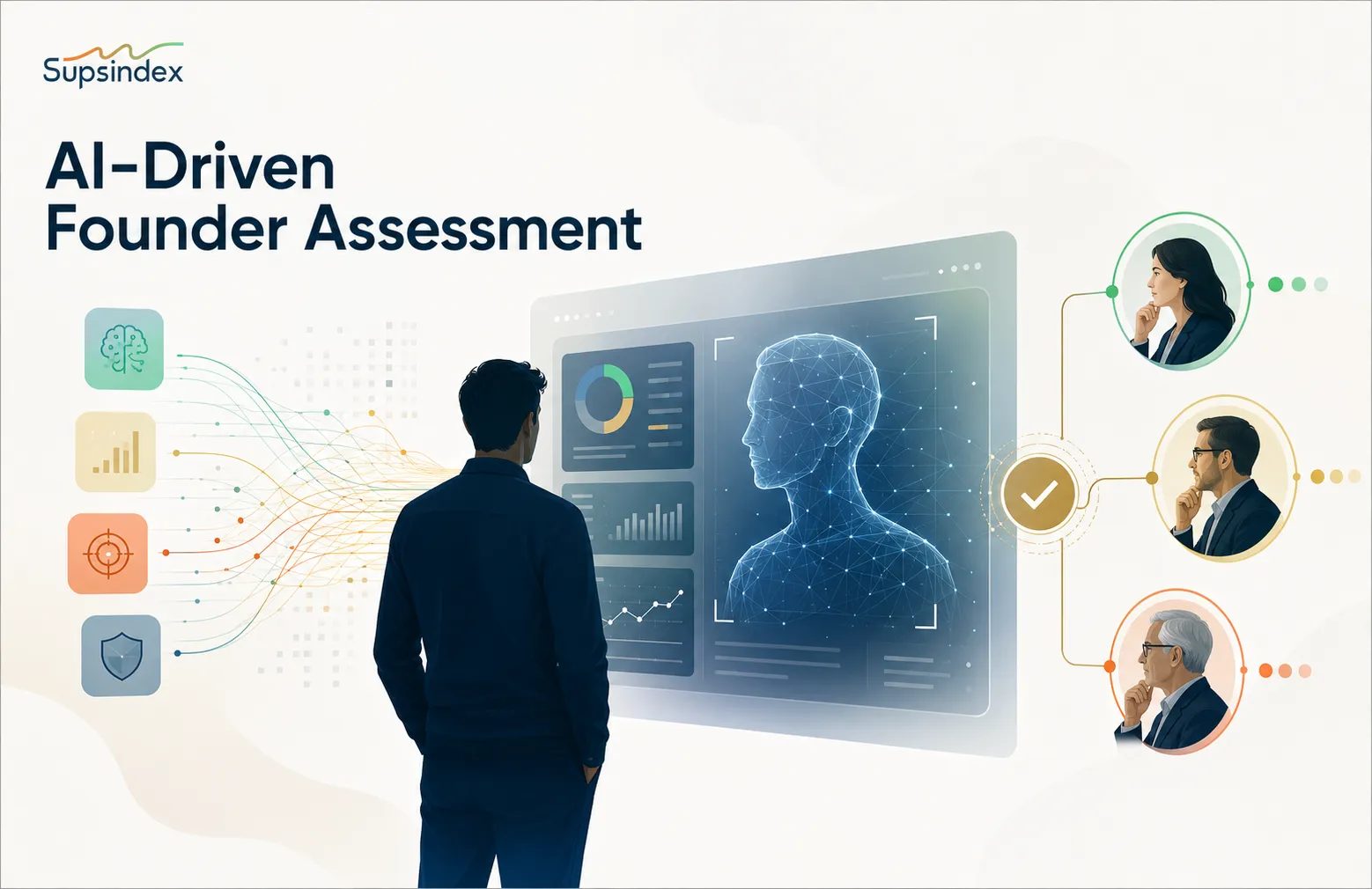
As the industry recognizes the urgent need to evaluate human capabilities, the natural progression has been to turn to technology, specifically artificial intelligence. The human resources sector has seen a massive influx of algorithmic solutions. Unfortunately, the only existing services that use artificial intelligence to process and analyze human capabilities are recruitment platforms designed for ordinary workers and traditional corporate employees. Platforms such as Pymetrics or HireVue utilize AI to screen resumes, analyze facial expressions, or test basic cognitive reflexes for highly structured, predictable roles. These existing tools are fundamentally not suitable for startup founders. The environment of a startup is not a structured corporate ladder; it is a chaotic arena characterized by extreme ambiguity, relentless resource constraints, and existential risk. Evaluating a founder requires an AI-driven founder assessment that is purpose-built for the unique pressures of venture creation.
Currently, it is only Supsindex that claims to use artificial intelligence in various critical areas related directly to startup founders. By introducing concepts such as the Leadership Flight Simulator and creating a Personalized Digital Clone—an AI twin built from the founder’s own data that represents stress-free, optimal decision-making—the platform tracks the divergence between human behavior and optimal logic under simulated market shocks. This innovative application represents the bleeding edge of an AI-driven founder assessment, moving beyond static questionnaires to measure actual decision-making quality under uncertainty. However, as an essayist and scientific observer, I must emphasize a crucial caveat: it would be entirely wrong to rely 100% on artificial intelligence in this field. Artificial intelligence, despite its formidable pattern-matching capabilities, has not yet reached a point where it possesses the contextual wisdom, the ethical nuance, and the psychological depth required to make autonomous, accurate decisions regarding the complexity of human potential. Algorithms can suffer from training bias, and they struggle to interpret the profound subtleties of human ambition, emotional resilience, and moral integrity. Blindly trusting an algorithm to determine a founder’s fate is a dangerous abdication of human judgment.
This limitation is precisely why the Supsindex model is profoundly more reliable. Supsindex does not outsource the final verdict to a black-box algorithm; instead, it utilizes a rigorous “Faculty Member” model to review questionnaires and oversee the assessment process. This platform leverages a network of over 200 scientific, academic, and experimental experts who actively calibrate the questions, review the behavioral coding, and validate the simulation data. By marrying the unparalleled processing power of an AI-driven founder assessment with the appropriate human touch, the model ensures scientific integrity. This hybrid approach guarantees that the insights generated are not only statistically significant but also practically meaningful and ethically sound. The integration of empirical experts ensures that the AI-driven founder assessment acts as a powerful diagnostic instrument rather than a flawed algorithmic judge, providing founders with the accurate, actionable self-awareness needed to scale their ventures successfully.
Custom Founder Assessment Creation
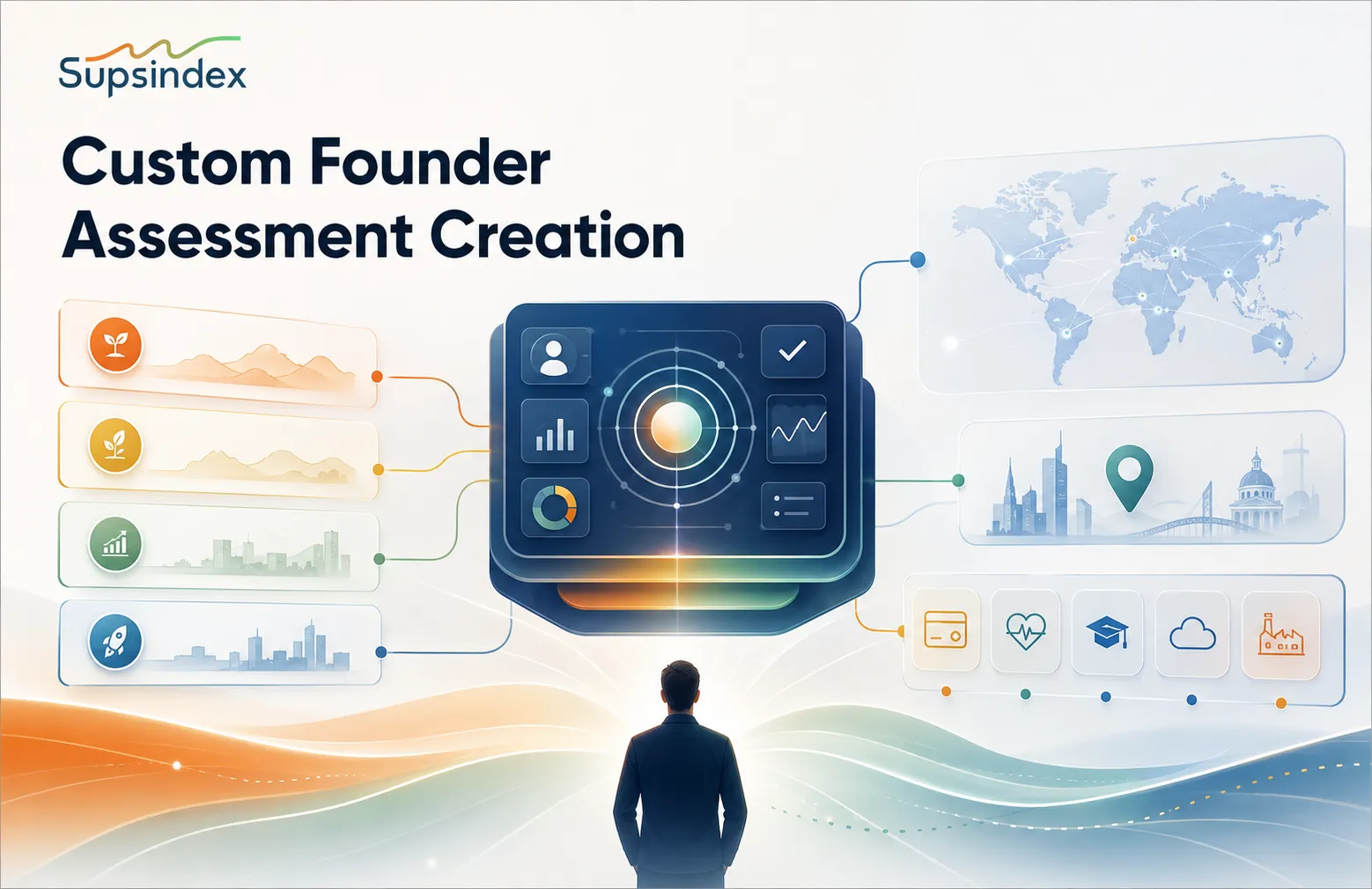
The most important part is context. Generic tests do not work well for founders because startups are not all the same. Every founder faces different problems. These problems can change based on the startup’s stage, country, market, and industry. A pre-seed founder needs to test the idea, understand the problem, and survive with limited resources. A seed-stage founder needs to find customers, improve the product, and build a strong early team. A growth-stage founder needs to lead bigger teams, hire the right people, and manage more complex problems. So the same test should not be used for every founder. A good founder assessment should change based on where the founder is in the startup journey.
It should also change based on the founder’s ecosystem. A founder in Europe may deal with different rules, investors, and funding systems than a founder in Southeast Asia or Latin America. That is why ecosystem awareness matters. A founder should understand the local rules, market conditions, culture, and funding environment around them. Without this, the test may miss important things. In the end, a strong assessment should also look at the founder’s industry. Every industry is different and so one test, obviously, is not enough to assess all founders because it is certainly going to miss multiple aspects that needs to be measured in each industries founders. a suitable and complete test should show if the founder knows the rules, problems, risks, and growth path of that specific industry. this is the problem, Supsindex has came to solve because It covers more than 55 popular startup industries. and also looks at different startup stages. An idea-stage founder is different from a founder with a growing company. Supsindex can also adapt to different countries and startup ecosystems. This makes the assessment much more specific and useful. So Supsindex gives each founder the right test, not the same test. this is not for judging the founder, rather it helps them to see where they truly lack.
Recent years have shown a big problem. A lot of startup money is wasted because of founder mistakes. Not all failure comes from bad markets or bad luck. Sometimes the people in charge are the problem. For years, investors looked at things like:
- Confidence
- School name
- Big market size
while these could help, they’re still not enough at all! a founder could easily sound smart but make horrible decisions at certain points. A strong idea can fail if the founder breaks under pressure. So we should not only test the startup. We should test the founder too. AI tests can help with that. They will help evaluate how founders make decisions under pressure. However, the important issue is whether AI alone is sufficient for the task. Obviously, not. The role of human observation remains rather crucial and should be used. Indeed, this human observation will ensure the accuracy of the results, making the whole process even more objective. Not every founder should undergo the same assessment test. It depends on their sector, location, and stage of development. The issues of a FinTech entrepreneur differ from those of an EdTech entrepreneur. And an entrepreneur with just an idea differs from one who runs a company. That is why custom founder assessments are important. When AI testing, expert evaluation, and bespoke assessments all combine, we get a much more effective tool for assessing founders. This allows investors to stop guessing. Founders can understand their true potential. The startup ecosystem can shift its attention from hype to ability. Supsindex allows founders to know their true soft power score.
