

AI Adaptability Assessments examine whether people can adapt, verify information, allocate resources, and make sound decisions as artificial intelligence evolves.
AI Adaptability Assessments: Valid or Ineffective?
In recent years, artificial intelligence has witnessed a dramatic revolution. The technology that used to be exclusive to engineers and data scientists has quickly become a ubiquitous productivity layer that affects almost all professions. Currently, entrepreneurs formulate their business plans using large language models, lawyers examine their contracts with the help of AI-supported applications, marketers automate their marketing campaigns, and programmers are more likely to have coding assistants rather than type everything themselves.
Thus, the diffusion of artificial intelligence technologies has completely changed the nature of the crucial question. Companies stop checking whether their employees utilize artificial intelligence. Now, organizations try to understand whether they do it effectively.
The difference might seem small, but it is one of the biggest changes in organizational competencies that took place within the last ten years. Since access to AI has been provided to anyone, its adoption cannot offer any benefits anymore. Only effective usage allows sustainable advantages to an organization.
This change has led to a totally new area of assessment — AI Adaptability Assessments.
It seems like these tests are going to evaluate the level of a person’s ability to work together with artificial intelligence. Universities use them for certification of AI literacy. HR-departments use them during hiring processes. Tech-companies use them to find out technical capabilities of applicants. And investors and start-up ecosystems started looking at the potential of using AI competence as an indicator of future entrepreneurial success.
But there is one unresolved issue of discomforting relevance:
Are we really measuring the future capability of people or only the current observable skill set?
The answer goes much further than just recruitment decisions.
It shapes our investments, education, policies, and, in the end, our competitiveness as organizations in the AI-driven world.
AI Adaptability Assessments: Effective or Not? The True Issue of Measuring the AI Capability
Almost all assessments have the same premise: the future capability can be determined by looking at the current performance. And it has been working quite well for psychology, education, professional certification for many years. Mathematics examination tests mathematical knowledge. Coding assessment estimates coding capability. Language test predicts communication skills.
AI, however, creates the entirely new ball game.
Unlike any other traditional technical skills, AI is changing constantly. New interfaces emerge on monthly bases. Models get better on a weekly basis. Workflows become outdated before organizations manage to finish internal training program. Advanced skills from last year trigger engineering efforts that will be increasingly automated by smart interfaces capable of creating the optimal prompts on their own.
Therefore, testing of today’s AI knowledge might not mean testing of tomorrow’s capability.
Here is where the true difference between AI literacy and AI adaptability appears.
AI literacy defines the current knowledge about the AI technology. It includes concepts, ethics, terminological knowledge, limitations of models, basic knowledge, etc.
AI adaptability defines how individuals react when the AI itself changes.
Will they be able to incorporate unknown tools into the workflow?
Will they spot the risks associated with automation?
Will they be able to change the workflow rather than accelerating it?
Will they be able to tell the truly valuable recommendation from the one that has been created confidently, yet flawed?
These issues go way beyond technical knowledge and encompass the cognitive and organizational abilities.
Many studies done in organizational psychology show that adaptability predicts the performance in highly uncertain environments better than static knowledge does. AI is definitely the most rapidly changing technological environment that we ever had.
As such, evaluating adaptability can become significantly more important than evaluating knowledge of existing instruments.
There are serious consequences to this conclusion for the process of test creation.
A very technically advanced test can be invalid if it measures variables that become obsolete in a matter of months.
The same way, an extremely practical hands-on test can evaluate current performance without understanding underlying behavioral traits that guarantee long-term success.
The validity of an assessment, therefore, is not solely dependent on its psychometric qualities but also on the choice of variables that retain their stability regardless of technological advancement.
Reasons to Question Traditional Capability Evaluation Models
Traditional models of capability evaluation were centered on measurable outcomes.
Could the candidate complete the task of programming?
Was the applicant able to answer theoretical questions?
Had the participant shown proficiency with a certain instrument?
All of these methods are appropriate if technologies advance in a gradual manner. Spreadsheet technologies advanced over decades. Accounting principles remain largely consistent. Legal reasoning relies on a set framework despite changing regulations.
Not so much with artificial intelligence.
Contemporary intelligent systems begin completing tasks rather than just facilitating them.
An employee doesn’t write marketing letters manually but controls generated options.
A developer doesn’t create functions from scratch but reviews the code produced by AI.
A product manager analyzes user feedback with AI before taking any decision.
A financial analyst doesn’t do all calculations manually but verifies automatically generated reports.
In all these cases, human value lies in controlling rather than performing work.
This change determines what needs to be assessed.
Fast generation of material becomes less important than critical analysis of generated material.
Creating complex prompts is no longer more important than spotting subtle mistakes in plausible outputs.
Memorizing technical terms is no longer more important than knowing when automation can—and cannot—be trusted.
As AI gets better and better, it is likely that the most enduringly valuable human skills will consist not in production but in judgment.
Judgment is much harder to quantify than knowledge.
Unlike facts, judgment usually does not have objectively correct answers; it is characterized by uncertainty, partiality, conflicting objectives, regulatory framework, scarcity of resources, and organizational context.
For this reason, evaluation systems designed to assess adaptability of AI face a unique challenge: they need to measure technical, behavioral, critical, and executional skills at the same time without being overly dependent on technologies which may soon become obsolete.
This challenge is one of the reasons why many organizations start thinking about the ways to measure AI capabilities in general.
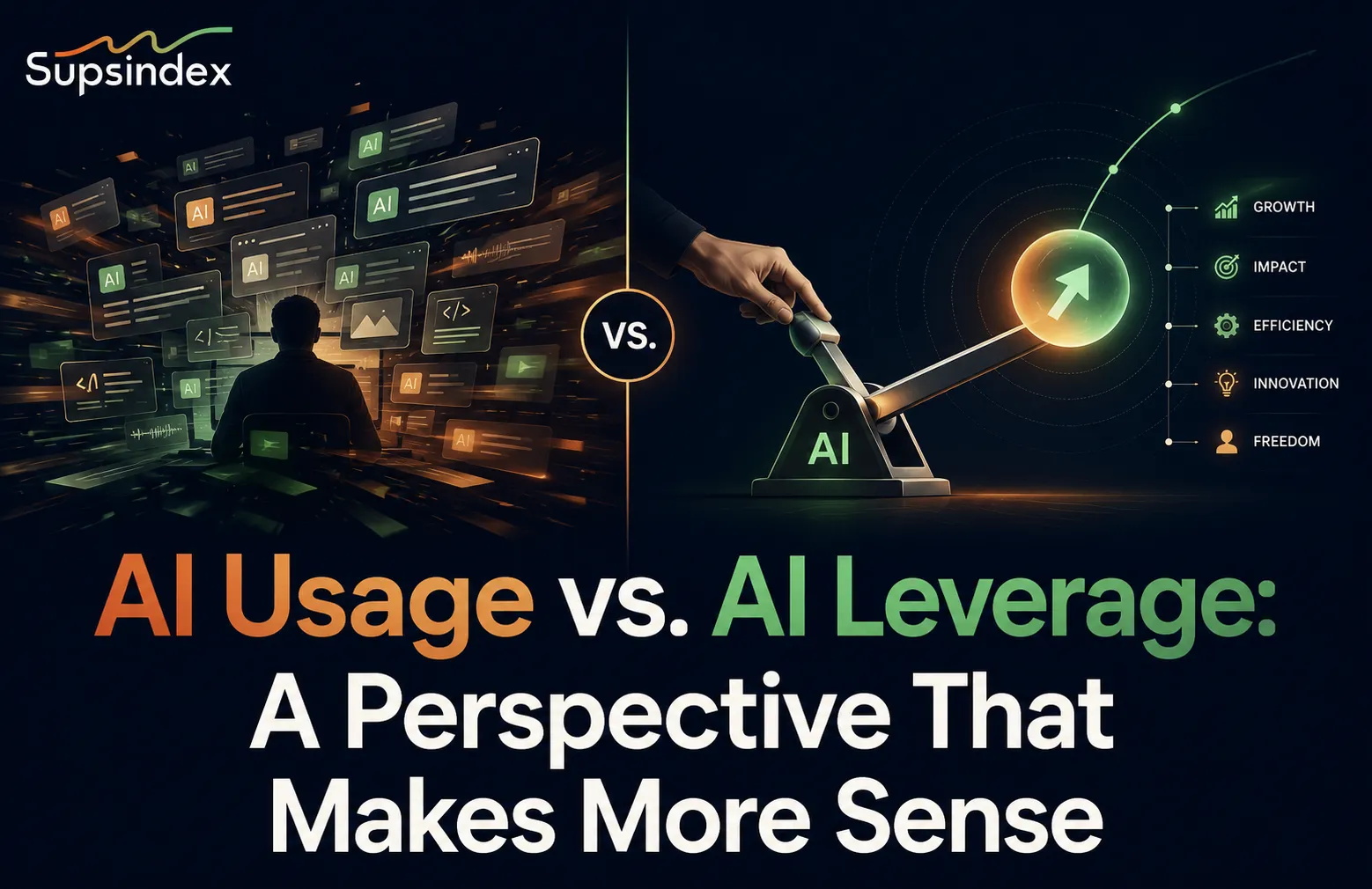
AI Usage vs. AI Leverage: A Perspective That Makes More Sense
One of the biggest misconceptions related to AI evaluation is the belief that usage frequency is always equal to good usage.
It is not always the case.
For example, two founders can interact with the same amount of time with the AI and get totally different results.
The first founder can automate mundane tasks, save money, and speed up customer validation process without losing control over AI outputs.
While another founder will create fancy presentations, use automation recommendations excessively, and make strategic mistakes due to AI without even knowing it.
Both of them are very active users of AI.
But their contributions to the organization are different.
Here comes the concept of AI leverage.
AI leverage does not refer to the frequency with which artificial intelligence is utilized; rather, it pertains to the degree to which human expertise in combination with machine intelligence produces excellent results.
Organizations are looking more and more for people who can augment—rather than replace—their own expertise using AI.
Individuals who can do so exhibit certain common traits.
They have a healthy skepticism toward any authoritative-looking output.
They know where automation brings efficiencies and inefficiencies.
They adapt quickly when tools change.
They re-engineer processes instead of speeding up old routines.
Most importantly, they keep their independent judgment while using computational help.
These traits may not be always detectable using standard multiple-choice tests or technical exercises. Rather, more complex kinds of evaluation need to take place in which context, decision making quality, consistent behavior, and adaptability play a part.
This realization has slowly found its way into conversations in fields of organizational psychology, talent assessment, and startups. Now, an ever increasing number of experts is calling for a shift away from evaluation of isolated AI competencies towards assessment of the way in which individuals use artificial intelligence in real-world decision-making under conditions of uncertainty.
This does not mean that existing assessment approaches become irrelevant. To the contrary, many of them give valuable feedback in their designed application. However, it means that as AI keeps developing, the concept of capability needs to evolve too.
The next question then becomes whether existing assessment approaches are measuring the right capabilities of candidates.
Evaluating Current State of Affairs in AI Assessments
With the growing demand for AI competency assessments, quite a variety of evaluation platforms has sprung up. Although these assessment platforms may look very similar because they are all called “AI assessment” platforms, their goals, methodologies, and views of competencies vary greatly.
Some of them assess the level of theoretical knowledge. Others concentrate on workplace preparedness or technical skill.
Another small group tries to assess founders and entrepreneurial potential. No single approach here is better than others. On the contrary, all of them serve the purpose of its target audience.
But the key point is whether their assessment models stay relevant in case when artificial intelligence stops being a special software product and transforms into the infrastructure which is embedded into the majority of business processes.
It is possible to discuss four models which have influenced the market at different times.
AI Adaptability Assessments: Reliable or Ineffective? Competitor 1 — AILAT: Assessing AI Literacy with Scientific Approach
One of the few AI assessment platforms currently which can be assessed as the most scientific among all is AILAT (AI Literacy Assessment Test). Its basis lies in well-known psychometric methods and especially in Item Response Theory. Instead of measuring productivity, it measures how good the person understands the theory of artificial intelligence.
The model assesses such dimensions as conceptual knowledge, practical skills, ethical considerations, and evaluating ability at once. This multi-dimensional approach makes it much more complex than multiple choice tests which measure only factual knowledge of a person. Scientifically speaking, use of adaptive psychometric method will make it even more reliable because of calibrating question difficulty based on previous answers. Thus, it makes the measurement more stable for various populations.
It is especially useful in cases when knowledge of AI is the goal. Universities, governmental organizations, highly regulated sectors, and certification programs need to make sure that there is a common level of knowledge about AI abilities and its proper use.
However, when one considers the idea of AI adaptability, two main drawbacks of the model become obvious.
Firstly: conceptual knowledge doesn’t mean operational skills.
Comprehending reinforcement learning, transformer architectures, or AI ethics doesn’t mean you’ll be able to reorganize workflows, combine several AI-based systems, and boost the efficiency of your organization. Nowadays, being good at executing tasks in uncertain conditions is more valuable than just knowing about them.
Secondly, static knowledge becomes obsolete faster than adaptive ability.
Development in the sphere of artificial intelligence is fast and dynamic. Thus, the assessment focused on contemporary terminology, characteristics of models, and interface-specific skills will inevitably capture some variables which won’t have any predictive power once technologies get updated. As a result, literacy level now doesn’t guarantee adaptability in the future.
These disadvantages don’t undermine the scientific contribution of AILAT. Instead, they indicate that literacy and adaptability are two separate phenomena which require a different philosophy of assessment.
AI Adaptability Assessments: Reliable or Ineffective? Competitor 2 – TestGorilla AI Fluency: Scaling Assessment for Modern Workforces
While AILAT considers AI from the viewpoint of education, TestGorilla’s AI Fluency tries to evaluate people’s ability to work in AI-driven environment from the perspective of corporate recruitment.
The main purpose of TestGorilla’s test is not scientific but practical: to help employers find candidates who are suitable for working in the workplace with artificial intelligence.
In order to do this, the platform uses not only structured multiple-choice tests but also situational judgment exercises and AI-enhanced interviews. The goal of the test is not just to check the technical knowledge of the candidate but also to estimate his or her characteristics like digital adaptability, system thinking, cooperation abilities, and experience with AI tools.
It is a very important realization.
Most companies don’t need AI scientists but marketers, accountants, managers, analysts, and customer support specialists who are able to incorporate artificial intelligence into their regular activity. Scalable assessment like this one is very useful for big companies which receive thousands of applications since it helps to cut costs and to standardize the selection process.
However, the scientific analysis shows that there are two structural disadvantages of this test.
First limitation: Proxy measurements are used instead of observation.
Behavioral response to stress often contrasts with explicit knowledge.
Second limitation: organizational setting continues to be highly generalized.
Workforce recruitment of course focuses on skills which can be applied universally in numerous organizational functions. Yet AI implementation seldom happens in such standardized fashion. The allocation of funds by a startup founder, compliance considerations for the administrator of a hospital, and optimization of the production process for an engineer all represent entirely different AI-related choices.
Assessment of organizational readiness thus poses a danger of ignoring factors which affect the actual applicability of AI solutions.
And once again, these remarks should not be regarded as shortcomings of TestGorilla’s use case. They are used just to prove that workforce screening and adaptability assessment solve related but nonetheless different issues.
AI Adaptability Assessments: Reliable or Ineffective? Competitor 3 — VibeOnly: Measuring Technical Execution
While AILAT is more concerned with knowledge and TestGorilla is focused on organizational setting, VibeOnly is mostly interested in measuring technical execution.
This company’s philosophy is simple: capability must be proven through actions.
The candidate is expected to complete various coding and prompting assignments using AI coding assistants and development environments directly. Assessment involves such parameters as execution speed, quality of the code produced, effectiveness of prompts, etc.
In terms of engineering recruitment, such approach clearly has some advantages.
Work samples provide more detailed data on how the candidate works: solves problems, iterates prompts, debugs, works with AI.
In fact, in many ways, VibeOnly could be considered one of the most effective performance assessment tools available today.
Nonetheless, there are two scientific limitations which should be discussed.
First limitation: technical execution is only one dimension of AI capability.
Software engineering is a specific field with its own performance parameters. Yet contemporary organizations are increasingly utilizing AI in finance, legal, marketing, customer success, research, product management, executive decisions, etc.
Second limitation: productivity is assessed more directly than judgment.
Efficiency in task accomplishment can tell much about technical ability but not much about strategic decision-making. For instance, would a developer accept a security suggestion suggested by a machine? Would the same developer implement the code that was created without checking? Would an AI-generated architecture solution be acceptable although costly in maintenance?
These decisions cannot be made efficiently based on the execution speed alone.
With AI systems becoming more autonomous, these evaluative abilities will soon become at least as important as the technical skill.
AI Adaptability Assessments: Reliable or Ineffective? Competitor 4 — Wayfinder Assessment Protocol: Founder Potential Through Behavioral Simulation
Unlike the previous solutions, Wayfinder Assessment Protocol uses an investment approach for evaluating the entrepreneur rather than a teaching one.
The assessment protocol combines psychometric test, behavioral simulation, résumé evaluation, and structured interview to predict founder potential. Instead of assessing the understanding of the concept of artificial intelligence, the framework tries to predict entrepreneur potential by using different kinds of evidence.
This is a notable conceptual shift.
An effective entrepreneur does not rely only on his or her technical knowledge to succeed in the business. Factors like leadership, resilience, learning agility, communication, and strategic thinking can make a difference as well. Behavioral simulation thus gives more information than a standard aptitude test.
Moreover, entrepreneurship is about dealing with uncertainty instead of problems; this idea is well-grounded in the decades of entrepreneurship research.
However, in terms of AI adaptability, there are two important limitations of the framework.
First limitation: AI is treated as one variable among many variables rather than an operational multiplier.
Founders increasingly use AI not just as a new software tool, but as infrastructure for product development, marketing, legal research, financial planning, customer service, and operational execution at once. Appraisals focused solely on the founders’ AI capability may fail to appreciate the increasingly important role AI plays in venture success.
Limitation two: difficulty observing actual AI decision-making behavior.
Interviews and simulations offer plenty of psychological information, but cannot help seeing how founders work with AI in their real operational tasks. Ability to detect hallucinations, ability to ration AI resources, ability to decide whether to use automation or expert judgment, ability to learn to work with a new AI technology require direct behavioral evidence, not self-descriptions.
All these abilities are becoming increasingly important when startups try to optimize their execution within the tightest possible resource constraints.
Lessons from These Platforms
When we examine four approaches to the assessment of AI capability, we notice one common feature.
Each platform works well in the environment it was initially created to operate in.
• AILAT is good at assessing AI literacy and knowledge.
• TestGorilla is great for enterprise hiring.
• VibeOnly gives robust evidence of technical execution.
• Wayfinder evaluates entrepreneurship and founder potential.
All four platforms show that AI capability is a multidimensional concept that consists of knowledge, execution, judgment, collaboration, and context.
On the other hand, all four platforms also highlight a problem. Most current assessment tools focus on evaluating competence in stable environments, while artificial intelligence rapidly evolves into an ever-changing layer. This means that in the future the assessment systems should evaluate people not only for what they know and are capable of doing right now, but for how effectively they adapt, validate, prioritize, and decide in constantly changing environments.
Such a shift represents moving from assessing usage of AI to assessing adaptability to AI, a distinction which will ultimately define whether or not these kinds of assessments will prove reliable tools for predicting future performance or become increasingly ineffective in an era dominated by the rise of AI.
AI Adaptability Assessments: Reliable or Ineffective? Why the Next Generation of Assessment Must Be Different
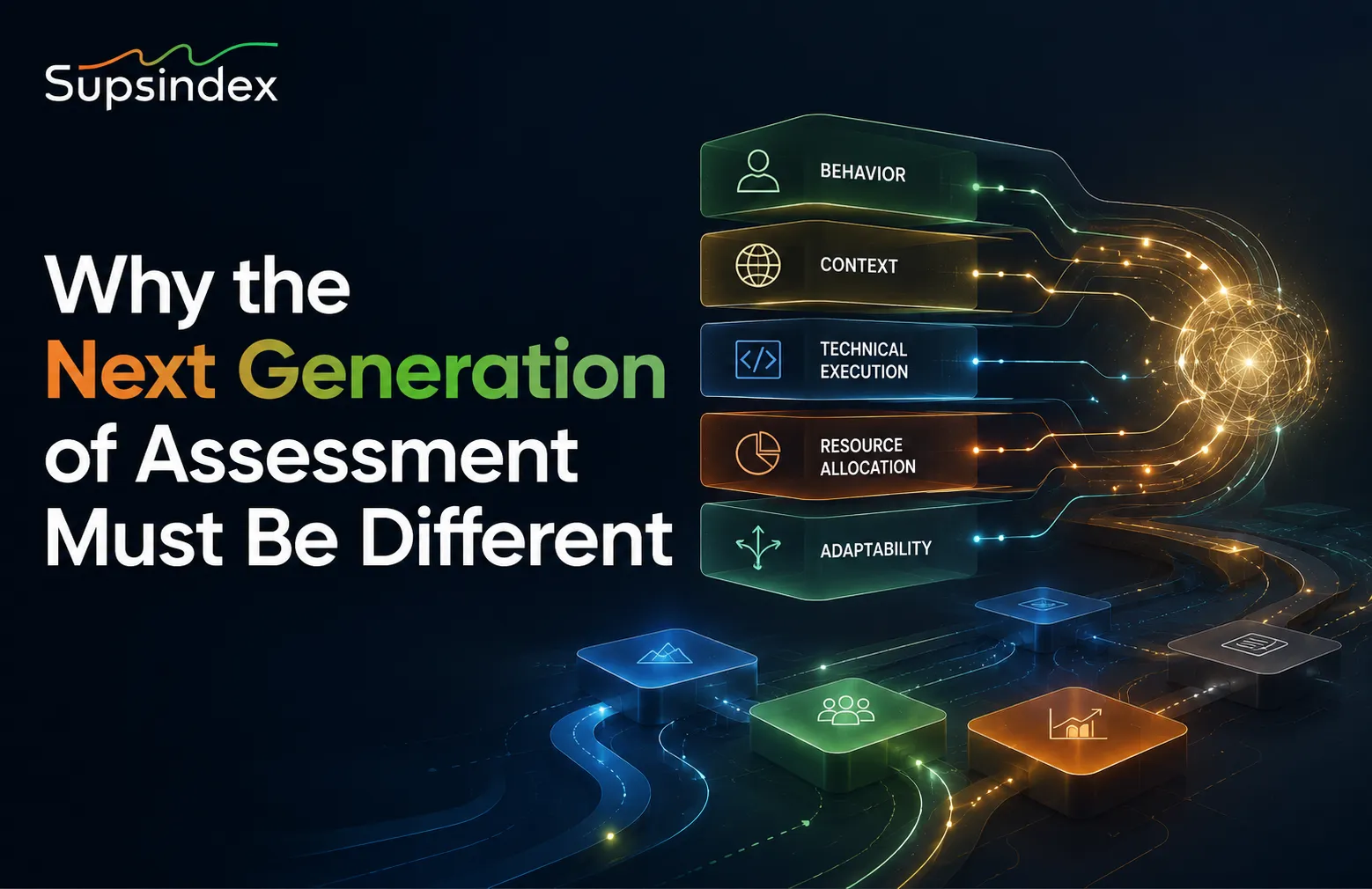
The fast-paced development of artificial intelligence technology has exposed a flaw that extends far beyond individual assessment platforms. It challenges the very fundamentals on which capability assessments are based.
For much of history, assessment was based on relatively constant competencies. A programming language developed slowly. Accounting standards updated periodically. Principles of management matured within decades. Measuring the knowledge a person had allowed one to make a fairly accurate prediction about future performance.
Not so with artificial intelligence.
New foundation models emerge every couple of months. The existing models gain totally new capabilities without requiring any change in the workflow of their users. Autonomous agents execute operations that were previously possible only with the direct intervention of a human operator, while new legislation keeps changing what is possible to do with artificial intelligence in a legally and ethically acceptable way.
In such circumstances, the key issue stops being “Can this person use AI?”.
Instead, it transforms into the following question:
“Can this person keep making correct decisions as the AI itself evolves?”
This situation requires a fundamentally different approach to assessment.
It involves looking not at the technical skills people already possess but at the way in which they think, adapt, allocate resources, verify data and coordinate actions of intelligent systems under realistic operating conditions.
In other words, it involves looking at the behavior rather than knowledge.
Behavior Rather Than Knowledge: Measuring Decisions Not the Answer
One of the fundamental discoveries of organizational psychology in recent decades is the realization that behavior often predicts future performance better than theoretical knowledge.
This fact is the reason why work-samples assessments perform consistently better than many traditional aptitude tests in terms of predicting future job performance.
Artificial intelligence reinforces this idea.
When the information can be generated instantaneously using artificial intelligence, then the value is not in possession of such information but in making correct decisions based on it.
Consider two startup founders preparing investor presentations.
Both use the same AI system.
Both receive polished financial forecasts.
Both receive impressive market statistics.
One founder immediately incorporates every generated figure into the presentation.
The other pauses.
They verify market assumptions.
They compare multiple sources.
They question unusually optimistic projections.
They remove unsupported claims before meeting investors.
Although both founders demonstrated identical AI usage, their decision quality differs dramatically.
The difference is not technical competence.
It is judgment.
Modern AI increasingly produces outputs that appear highly credible even when they contain subtle factual inaccuracies, unsupported assumptions, or flawed reasoning. Consequently, human evaluation becomes more—not less—important as generation quality improves.
This phenomenon represents one of the defining characteristics of AI-native work.
Future assessments therefore benefit from evaluating how people respond to uncertainty rather than how quickly they generate content.
Context Matters More Than Universal Scores
Another challenge confronting AI assessments concerns context.
Many existing evaluation systems attempt to produce universal scores that can be compared across broad populations.
While useful for standardization, universal scoring becomes increasingly problematic when AI capability depends heavily upon operational environment.
A marketing director and a cybersecurity engineer may both demonstrate excellent AI skills while requiring entirely different competencies.
Likewise, founders operating in biotechnology, financial technology, manufacturing, or healthcare encounter radically different regulatory obligations, customer expectations, and operational risks.
An identical AI decision may be appropriate in one industry while creating severe consequences in another.
For example, automating customer service responses using a public language model may represent an efficient solution for an online retail company.
The same approach could expose confidential medical information if implemented carelessly within healthcare.
Similarly, allowing AI to generate preliminary legal documentation might accelerate routine administrative work for some businesses while creating substantial compliance risks in heavily regulated industries.
Consequently, context becomes inseparable from competence.
A meaningful assessment should therefore recognize not only what participants choose, but also whether those choices remain appropriate within their specific operational environment.
This perspective aligns with a broader trend in management science, where effectiveness is increasingly understood as context-dependent rather than universally defined.
Rather than assuming identical behaviors produce identical outcomes across organizations, modern assessment frameworks increasingly acknowledge that industry, organizational maturity, regulatory exposure, and functional responsibility all influence what constitutes good decision-making.
From Individual Tasks to Operational Systems
Another important transition concerns the unit of analysis itself.
Many current AI assessments evaluate isolated tasks.
Write this paragraph.
Generate this code.
Answer these theoretical questions.
Complete this prompt.
These activities certainly provide useful information.
Yet real organizations rarely succeed because individuals complete isolated tasks efficiently.
Organizations succeed because interconnected systems function effectively.
Artificial intelligence increasingly operates across these systems rather than within individual activities.
A customer support interaction may trigger automated documentation, CRM updates, marketing segmentation, analytics dashboards, internal notifications, compliance logging, and product feedback simultaneously.
No single employee directly controls this workflow.
Instead, individuals supervise systems composed of multiple technologies working together.
This transition suggests that future AI adaptability assessments should extend beyond evaluating isolated human-AI interactions.
They should examine how participants coordinate multiple processes simultaneously.
Can they identify where automation introduces unnecessary complexity?
Can they recognize when human intervention remains essential?
Can they allocate limited resources efficiently?
Can they redesign workflows instead of simply accelerating existing routines?
These questions reflect organizational capability rather than individual software proficiency.
As businesses increasingly become AI-enabled systems instead of collections of isolated departments, assessing systems thinking becomes increasingly valuable.
Why Resource Allocation Has Become an AI Skill
One characteristic frequently overlooked in discussions surrounding AI capability is resource allocation.
Artificial intelligence is often portrayed as virtually free.
In reality, every organizational decision involving AI carries associated costs.
These costs may include subscription fees, API consumption, computational resources, implementation time, employee attention, cybersecurity oversight, legal review, or opportunity cost.
Consequently, effective AI adoption increasingly resembles capital allocation rather than software usage.
Consider a founder preparing for a product launch.
Should they purchase an existing AI-powered design platform?
Should they build an internal automation pipeline?
Should they hire a freelance specialist?
Should they rely on generative AI despite potential quality limitations?
Each option carries different financial implications, execution speeds, operational risks, and long-term maintenance requirements.
The technically sophisticated solution is not always the economically optimal solution.
Likewise, the fastest solution may not produce the highest strategic return.
Future assessments therefore benefit from evaluating not only technical execution but also decision quality under resource constraints.
This perspective reflects an increasingly important reality of entrepreneurship.
Successful founders rarely maximize technological sophistication.
Instead, they maximize organizational leverage.
Artificial intelligence becomes valuable not because it exists, but because it enables superior allocation of limited resources.
The Importance of Verifying AI Rather Than Trusting It
Perhaps the most significant change introduced by generative AI concerns verification.
Traditional software generally behaves predictably.
Generative AI behaves probabilistically.
The same prompt may produce different responses.
Correct reasoning may coexist alongside fabricated references.
Accurate calculations may appear beside incorrect assumptions.
Fluent writing may conceal logical inconsistencies.
Consequently, verification becomes a core professional competency.
Increasingly, organizations recognize that their greatest operational risk does not arise from employees refusing to use AI.
Instead, it arises when employees trust AI without sufficient scrutiny.
This pattern appears across multiple domains.
Developers accept insecure code suggestions.
Analysts present hallucinated statistics.
Legal professionals overlook fabricated case citations.
Executives make strategic decisions using unverified market projections.
Each example illustrates the same behavioral phenomenon.
The problem is not AI generation.
The problem is insufficient verification.
For this reason, modern assessment frameworks should observe not only final answers but also the decision process itself.
Did participants verify evidence?
Did they cross-reference sources?
Did they recognize ambiguity?
Did they seek additional confirmation before making irreversible decisions?
These behavioral signals often provide richer insight than outcome scores alone because they reveal how individuals think when certainty is unavailable.
Characteristics of a Modern AI Adaptability Assessment
Taken together, these developments suggest that the next generation of AI adaptability assessments should move beyond measuring isolated technical proficiency.
Instead, they should incorporate characteristics such as:
- realistic work-based scenarios rather than abstract theoretical questions;
- evaluation of decision-making alongside technical execution;
- context-sensitive scoring that reflects professional roles and industry requirements;
- assessment of verification behaviors rather than generation speed alone;
- observation of resource allocation and prioritization under realistic constraints;
- adaptive scenarios that evolve as participant performance changes;
- measurement of human-AI collaboration instead of AI dependence;
- and reporting that provides diagnostic insight into strengths, limitations, and development priorities rather than a single static score.
Importantly, these characteristics represent a broader direction for assessment science rather than the blueprint of any single commercial platform.
As AI continues transforming organizational work, assessments that capture authentic operational behavior are likely to provide stronger predictive value than those relying exclusively on knowledge recall or isolated task completion.
Ultimately, the objective is not to determine whether individuals can interact with artificial intelligence.
The objective is to understand whether they can continue making sound decisions as artificial intelligence becomes an increasingly autonomous participant in business operations.
That distinction may define the difference between assessments that merely describe current skills and those capable of predicting future success.
AI Adaptability Assessments: Reliable or Ineffective? Looking Beyond Today’s Assessment Models
Artificial intelligence is often described as a technological revolution. From an assessment perspective, however, it is something even more disruptive: it is a moving target.
Unlike traditional competencies, AI capability does not remain static long enough for conventional evaluation models to stabilize. Every major advancement in foundation models, autonomous agents, multimodal systems, or enterprise automation changes not only how people work but also what it means to work effectively.
Consequently, AI adaptability assessments should never be viewed as permanent measurements of competence. Instead, they should be understood as dynamic indicators that require continuous refinement as technology, organizational practices, and regulatory expectations evolve.
This perspective helps answer the central question posed throughout this article.
Are AI adaptability assessments reliable?
The answer is neither an unconditional yes nor an outright no.
They are reliable only to the extent that they measure enduring human capabilities rather than temporary technological skills.
Reliability Depends on What Is Being Measured
Assessment science has long recognized an important distinction between reliability and validity.
An assessment may consistently produce identical scores and therefore be statistically reliable. However, if it measures the wrong construct, those reliable scores provide little practical value.
This distinction is particularly important in artificial intelligence.
Suppose an assessment perfectly measures an individual’s proficiency with today’s prompting techniques.
Six months later, a new generation of AI assistants automates prompt optimization entirely.
The assessment remains reliable.
Its predictive value, however, declines dramatically because the measured skill has become less relevant.
The opposite situation is also possible.
An assessment measuring decision quality, critical evaluation, learning agility, and behavioral adaptability may remain useful despite rapid technological change because these underlying human capabilities continue influencing performance even as tools evolve.
This observation suggests that the future of AI assessment lies not in tracking every technological innovation but in identifying the cognitive and organizational characteristics that remain valuable regardless of which AI systems dominate the market.
The Emerging Role of AI Assessments in Business Strategy
Although discussions surrounding AI assessments often focus on recruitment, their strategic value extends much further.
Organizations increasingly need objective ways to understand where AI creates competitive advantage and where capability gaps remain.
For founders, this may influence hiring priorities and operational planning.
For investors, it may provide an additional signal when evaluating execution capacity alongside market opportunity and financial performance.
For accelerators, it may help identify development needs before companies enter intensive growth programs.
For established enterprises, assessments may support workforce development initiatives, digital transformation strategies, and leadership training.
Importantly, these applications require more than simple certification.
Decision-makers rarely benefit from a single numerical score in isolation.
Instead, they require diagnostic information.
An effective assessment should explain not only how someone performed, but why they performed that way and which capabilities deserve further development.
This diagnostic perspective transforms assessments from selection tools into organizational learning instruments.
Rather than simply classifying individuals as capable or incapable, they become mechanisms for continuous improvement.
Why Assessment Should Encourage Better AI Behavior
Another important consideration concerns the behavioral influence of assessment itself.
Every assessment shapes behavior.
Students study what examinations reward.
Employees optimize for measured performance indicators.
Organizations allocate resources toward evaluated competencies.
Therefore, AI adaptability assessments inevitably influence how people choose to work with artificial intelligence.
If assessments reward generation speed alone, users naturally prioritize producing more content more quickly.
If assessments emphasize prompt engineering in isolation, individuals devote disproportionate attention to prompt construction while neglecting verification.
Conversely, assessments that recognize critical evaluation, responsible delegation, effective resource allocation, and thoughtful decision-making encourage healthier organizational behaviors.
This distinction becomes increasingly significant as AI systems grow more autonomous.
Future professionals will likely spend less time creating information and more time supervising intelligent systems that create information on their behalf.
Assessment frameworks should evolve accordingly.
Rather than reinforcing outdated productivity metrics, they should encourage behaviors associated with safe, efficient, and strategically sound AI adoption.
A Practical Framework for Evaluating Any AI Assessment
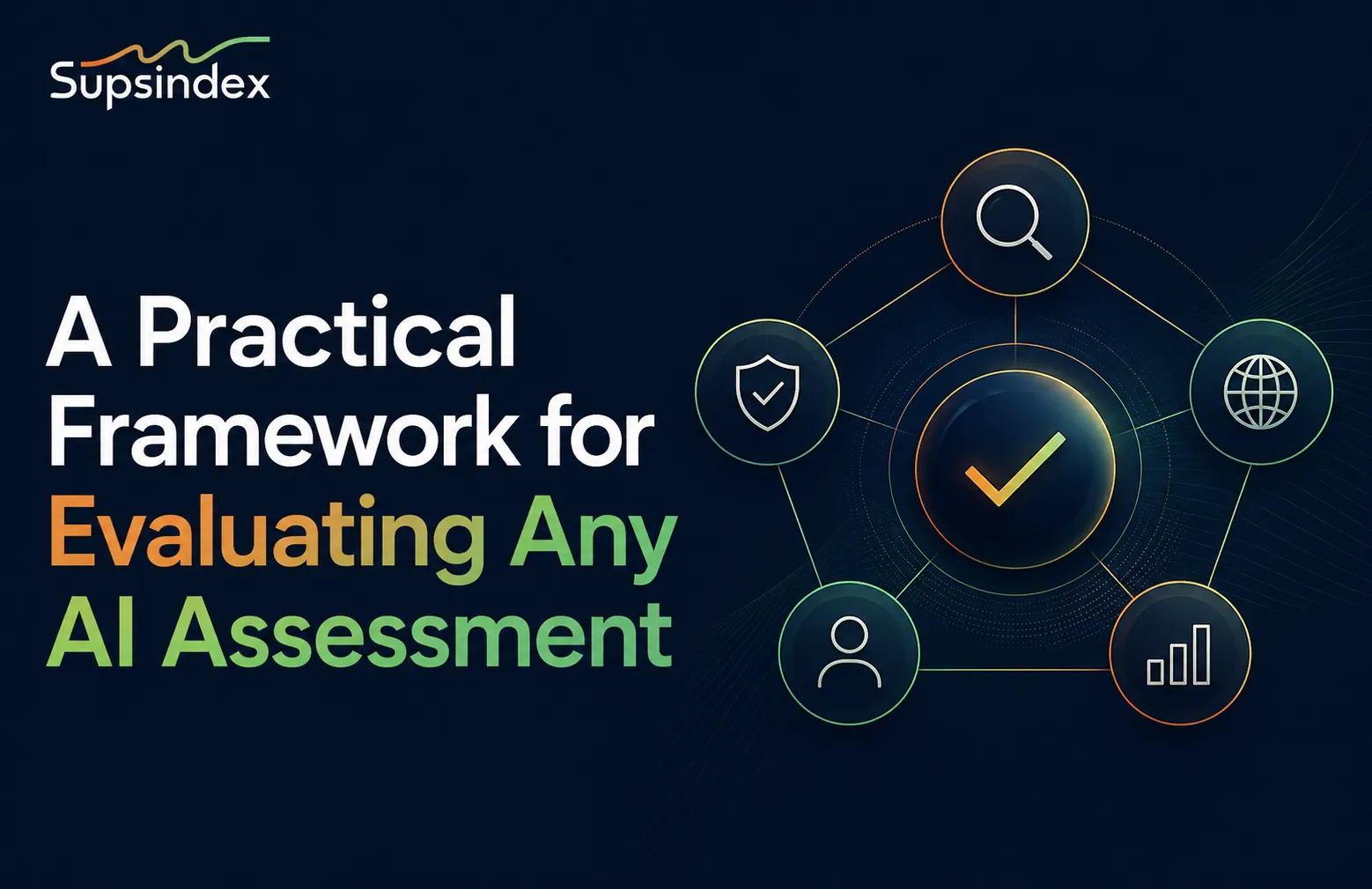
For organizations considering any AI adaptability assessment, several practical questions may help determine whether the framework is likely to remain useful over time.
Does the assessment measure enduring capabilities or temporary tool familiarity?
Technology changes rapidly. Sound judgment, learning agility, and critical thinking evolve far more slowly.
Does it observe real behavior or rely primarily on self-reporting and theoretical knowledge?
Behavior observed under realistic conditions generally predicts future performance more accurately than stated intentions.
Does it evaluate context rather than assuming every industry requires identical AI capabilities?
The competencies required in healthcare, finance, manufacturing, education, and early-stage startups differ substantially.
Does it encourage responsible AI use rather than maximizing automation at all costs?
Effective organizations balance efficiency with governance, quality, and human oversight.
Does the assessment provide actionable insight?
A useful report should help individuals improve their capabilities rather than merely informing them where they rank relative to others.
These questions do not favor any particular assessment provider.
Instead, they represent general principles that assessment designers, organizations, and decision-makers should increasingly consider as AI continues reshaping professional work.
AI Adaptability Assessments: Reliable or Ineffective? The Final Verdict
The rapid emergence of AI adaptability assessments reflects a genuine market need.
Organizations require better methods for understanding how individuals collaborate with intelligent systems.
Investors seek stronger indicators of execution capability.
Educational institutions need frameworks that move beyond basic AI literacy.
Businesses want objective evidence that AI investments translate into meaningful organizational performance.
Current assessment platforms have made significant progress toward these goals.
Academic frameworks provide scientifically rigorous measures of AI literacy.
Enterprise platforms help organizations identify digitally capable employees.
Technical assessments evaluate practical engineering performance.
Founder-oriented evaluations recognize that entrepreneurship requires more than technical expertise.
Each contributes valuable insight within its intended domain.
At the same time, artificial intelligence is changing faster than most assessment models were originally designed to accommodate.
The defining capabilities of tomorrow’s AI-native workforce are likely to include judgment under uncertainty, effective verification, adaptive learning, responsible delegation, systems thinking, and strategic resource allocation—competencies that extend well beyond simple AI usage.
As a result, the future of AI adaptability assessment is unlikely to belong to frameworks that merely ask whether people can use artificial intelligence.
Instead, it will belong to assessment models that evaluate how intelligently people integrate AI into complex, uncertain, and continuously evolving operational environments.
In that sense, the debate posed by this article has a nuanced answer.
AI Adaptability Assessments are neither inherently reliable nor inherently ineffective.
Their value depends entirely on the behaviors they measure.
Assessments focused exclusively on today’s tools may lose relevance as technology advances.
Assessments grounded in enduring human decision-making, contextual reasoning, verification behavior, and adaptive problem-solving are far more likely to remain meaningful as artificial intelligence becomes an increasingly integral part of business and society.
Ultimately, the objective should not be to identify who uses AI most frequently.
The objective should be to identify who can continue making sound decisions when AI becomes faster, more autonomous, and more deeply embedded in every aspect of organizational life.
That distinction may prove to be one of the most important competitive advantages of the AI era—not only for individuals but also for the organizations that depend upon them.
