


Identifying the hidden pattern behind why brilliant academic founders fail is finally possible through behavioral data and the GEB test.
How the GEB Test Finally Explained Why Academic Stars Keep Crashing
By Renate K.
Mentor, **** Incubator – Vienna
Let me start with a confession.
For the past three years, I’ve been mentoring young innovators in a government-backed program in Vienna. The **** Incubator.
Bright minds. Top of their classes. Winners of hackathons. They walk in with pitch decks that could make a VC cry tears of joy.
And then, six months after we release them into the wild, they crumble.
Not because the market is cruel. Not because their tech is weak.
But because something inside them—something I couldn’t name—keeps pulling them off the cliff.
I’ve watched this happen again and again. And every time, I asked myself: Renate, why can’t you see it coming?
The Moment Everything Changed to Reveal the Hidden Pattern
Back in 2019, I met a guy named Shahriar at a side event in Vienna.
He was talking about measuring founder behavior. I was polite, nodded, and filed it under “interesting but impractical.”
Fast forward to March 2025. He reached out again—this time asking me to help validate his market gaps. I did.
Then nothing.
Then, in December 2025, a message: “Renate, we’re running a calibration program. Bring as many founders as you want. It’s free.”
I thought, Why not? I invited over 40 founders. 22 actually took the tests. Mostly from our incubator.
A few days later, I opened the first GEB report.
And I felt the floor shift under my feet.
What the GEB Reports Taught Me About This Hidden Pattern
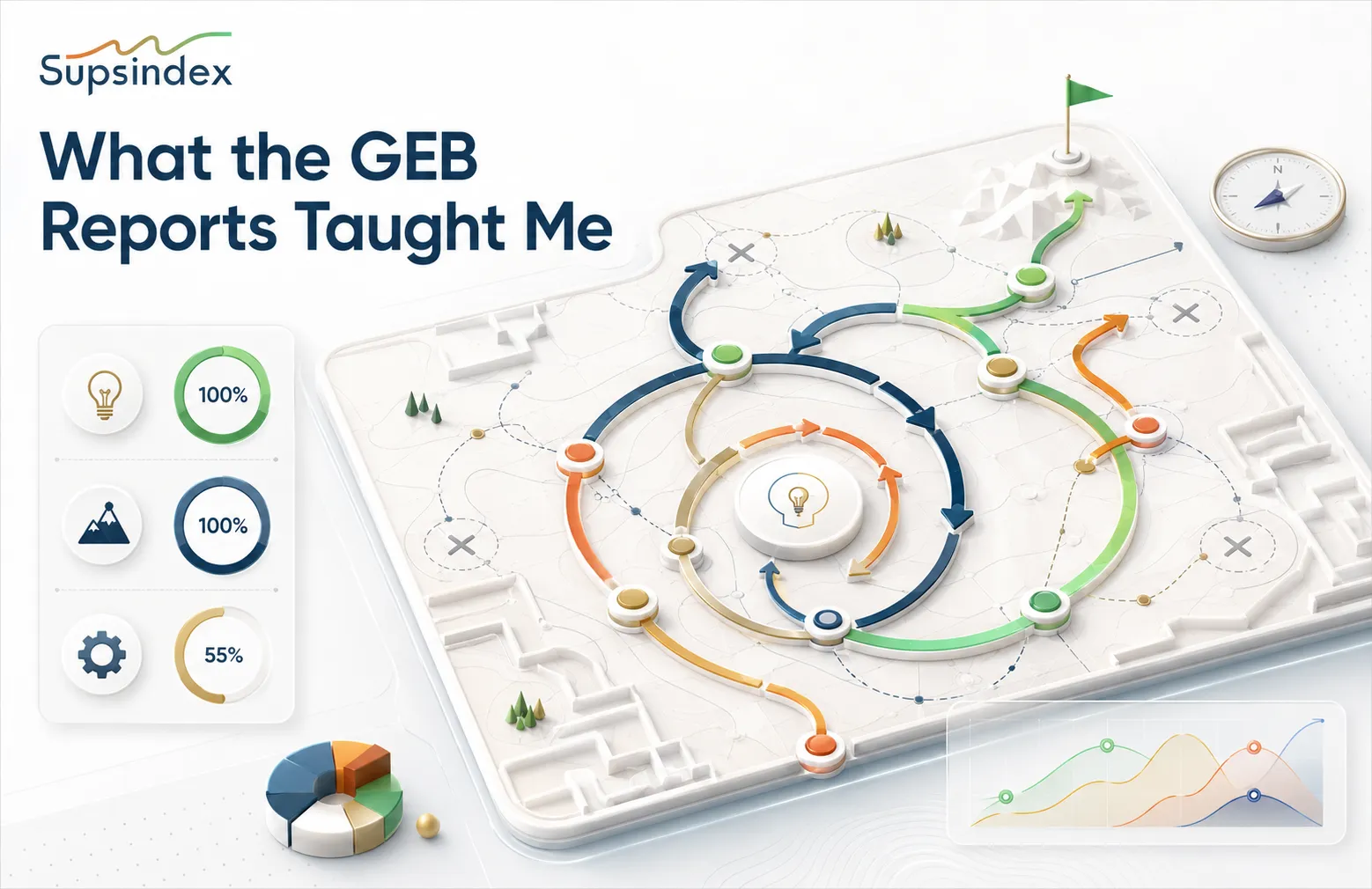
For years, I’d been trying to solve a puzzle: Why do brilliant students fail the same way?
Why do they start every conversation with “I have a new direction” and end every quarter with “we pivoted again”?
The reports didn’t just give me answers. They gave me a map.
More than half of the founders in our program shared a pattern I’d never been able to articulate.
The GEB called it Novelty Bias.
I looked at the numbers:
- Curiosity: 100%
- Risk Tolerance: 100%
- Operations: barely 55%
These founders weren’t lazy. They weren’t stupid. They were addicted. Addicted to the dopamine of the “new.”
Every time a competitor sneezed, they changed direction. Every time someone mentioned blockchain, they dropped their working prototype to build a decentralized version of a to-do list.
I saw it so clearly now. The technical debt. The confused customers. The half-finished marketing channels abandoned after two weeks.
The graveyard of “quick pivots” that never saw a return on investment.
And the worst part? They didn’t know. They thought they were being agile. They thought they were innovating.
They weren’t. They were running in circles.
The Conversation I Could Finally Have
Here’s the thing about mentorship: you can’t fix what you can’t name.
Before the GEB, I’d try to point out the chaos. “Maybe stick with this channel for another month?”
They’d nod, then ignore me. Because they didn’t see the pattern. They thought they were special. Unique.
Different from every other founder who failed the same way.
The report changed that.
When I sat down with a founder and showed them: “Your Curiosity is 100%. Your Risk is 100%. But your Operations score is 55%. Here’s what that means.”
– the conversation shifted.
It wasn’t me judging them. It was data. And data doesn’t have an ego.
Suddenly, they weren’t defensive. They were curious (ironically). “Wait, so I’m not alone? Other founders here have the same profile?”
Yes. And that was the magic.
For the first time, they saw themselves as part of a category—not a unique snowflake destined to break the rules.
And once they saw that, we could actually start building a bridge.
Why I’m Telling You This
Look, I don’t have a perfect success rate. Some founders still chase shiny objects.
But I’ve saved countless hours of frustration—theirs and mine—by knowing, upfront, who’s wired to jump ship every three weeks.
If you’re a mentor, you don’t need another personality quiz.
You need a tool that shows you the hidden lines connecting your most frustrating mentees.
Run the GEB. Not on one founder. Run it on a cohort. You’ll see the patterns.
And those patterns will change how you mentor forever.
Supsindex Note: Renate K. has been mentoring founders in Vienna’s **** Incubator for over three years.
She now requires GEB assessments for all new startup teams.
She has also stopped pretending she can predict everything without data.
